Picking the wrong Instagram influencer analytics tool is an expensive mistake. Not just in money, but in time, missed opportunities, and campaigns built on data you cannot actually trust. And yet most brands and agencies pick their tools the way they pick a restaurant on a busy evening. They scroll through a list, look at the top results, and go with whatever seems popular or affordable.
The result? Tools that give you public-facing estimates dressed up as real insights. Platforms that look impressive on a demo but fail the moment you need to make a serious budget decision. If you already understand why influencer marketing is important for your brand or agency, then you also know that the data you use to run it must be reliable. The tool you pick to analyze your Instagram influencers will either support that or undermine it.
This guide is written for people who are actively looking for an Instagram influencer analytics tool, specifically one that offers a free trial so they can test it before committing. We are going to walk through every feature that actually matters, explain the difference between tools that look good and tools that work well, and give you a clear checklist to use when you sit down for a trial.
We will also talk about Hyperr Manage, which approaches Instagram influencer analytics in a fundamentally different way from most tools on the market. It is not a discovery database. It is a verified, first-party analytics and campaign management platform built around the influencers you actually work with. It starts at $75 per month and offers a 7-day free trial. But before we get there, let us cover what good really looks like — so you can recognize it when you see it during any trial.
Why the Free Trial Period Is More Important Than Most People Realize
Most people use a free trial to poke around the interface and see if the design feels nice. That is not how you evaluate an analytics tool. You are not buying a chair. You are choosing a platform that will influence your budget decisions, shape your client reporting, and determine how accurately you understand your influencer campaigns for months or years.
A free trial is your chance to test the tool against your actual work, not against a demo dataset curated to look good. That means you should go into any trial with a specific plan: bring your own influencers, run a real (or simulated) campaign workflow, generate a performance report, and check whether the numbers align with what you can verify independently.
What Most Brands Get Wrong During a Trial
The most common mistake is spending the trial period exploring features rather than testing data accuracy. A beautiful dashboard with inaccurate numbers is worthless. A slightly clunky interface with verified data is invaluable. During your trial, the question to keep asking is: can I trust this number? Not: does this look impressive?
A second common mistake is testing the tool with fake or hypothetical influencer data instead of your actual roster. If you manage 20 influencers regularly, bring those 20 influencers into the trial. Connect the accounts that can be connected. Run the reports you would actually need. The tool needs to prove itself against your real work, not a curated demonstration.
What a Good Free Trial Should Give You Access To
Not all free trials are equal. Some tools offer a full-access trial for a limited period. Others give you a limited feature set permanently. A few offer a demo-only experience where a salesperson walks you through the platform. Here is what to expect from each:
| Trial Type | What You Get | Useful For |
| Full-access time-limited trial | Complete feature access for 7-14 days | Best option — lets you test everything properly |
| Feature-limited free plan | Basic features, permanently free | Good for initial exploration, not serious evaluation |
| Demo only | Guided walkthrough, no real access | Least useful — you see what they want you to see |
| Free tier with paid upgrades | Core features free, advanced locked | Depends on whether core features cover your needs |
Hyperr Manage offers a 7-day full-access free trial. That is enough time to onboard your influencers, check their verified analytics, create a campaign, generate a digital agreement, and test the reporting. For a complete picture of what tools like this offer, our guide to the best influencer marketing campaign management tools is a good reference point.
The 9 Features That Genuinely Matter in an Instagram Influencer Analytics Tool
Every tool will claim to offer analytics, insights, and data-driven decisions. The question is what is actually behind those words. Here are the nine features that separate a genuinely useful Instagram influencer analytics platform from one that just looks the part.
Feature 1: Verified First-Party Data vs Estimated Public Data
This is the most important distinction in the entire analytics tool landscape, and it is one that most buying guides gloss over or do not explain clearly enough.
The majority of Instagram influencer analytics tools work by reading publicly available data. They can see an influencer’s follower count because that is public. They can count the likes and comments on public posts. They can estimate engagement rates based on those numbers. They might also use machine learning to guess at audience demographics based on patterns in usernames, bios, and content.
What they cannot see is what Instagram keeps private. And a significant amount of the most valuable data is private: actual story views, real reach per post as opposed to estimated impressions, verified audience age and gender breakdown, exact geographic distribution of followers, and genuine engagement from real accounts versus bots.
When you use a tool built on public data, you are making decisions based on estimates. That might be acceptable for early-stage influencer research when you are exploring a new niche. It is not acceptable when you are committing serious budget to a campaign and need to know that the influencer you are choosing actually reaches the audience you are paying to reach. Our dedicated guide on influencer audience analytics and why demographics matter more than follower count goes deeper on exactly why this distinction shapes campaign outcomes.
First-party data works differently. When an influencer connects their own Instagram account to a platform, they authorize that platform to read their Instagram Insights data. This is the same data the influencer themselves sees in their Instagram app: actual story completion rates, real reach, verified audience breakdown, and follower growth patterns. No estimates. No guesswork. The actual numbers.
Hyperr Manage is built entirely on this model. Every influencer in your roster has connected their own account, so every piece of data you see is verified first-party information. This is not a minor advantage. For brands making real budget decisions, it is the difference between calculated risk and blind trust.
Feature 2: Audience Demographics That Are Actually Real
Ask most analytics tools where they get their audience demographic data and the honest answer is usually: we estimate it based on what we can observe publicly. That might mean looking at the language of comments, the locations of accounts that interact with the influencer, or algorithmic guesses based on content topics.
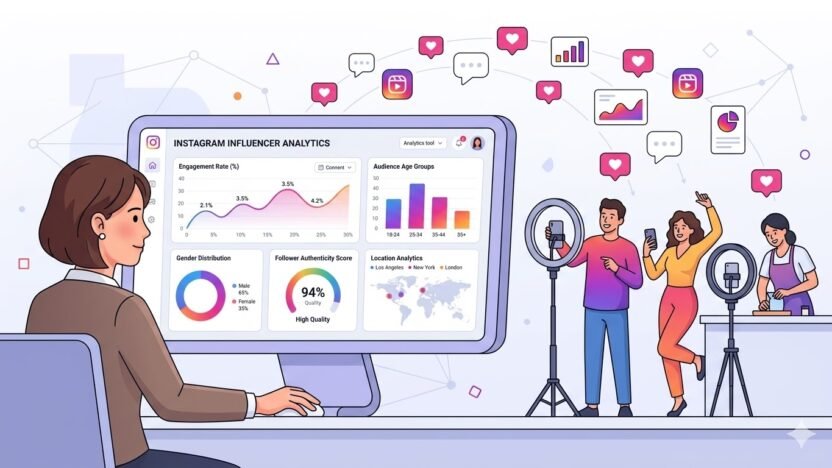
Real audience demographics come from one source: the influencer’s own account data. When an influencer logs into their Instagram app, they can see exactly what age range their audience falls into, what percentage is male or female, which countries they are in, and which cities are most represented. That data lives in Instagram Insights. A tool that can access Instagram Insights through a verified account connection shows you that exact data.
Why does this matter for your evaluation? Because audience demographics determine whether an influencer’s followers actually match your target customer. A fashion influencer with 200,000 followers sounds impressive until you discover that 70 percent of their audience is outside your target country and the age skew does not match your buyer profile. A tool that estimates demographics might show you the right general direction. A tool with verified data shows you the exact truth.
Feature 3: Story Views and Reel Performance Tracking
Instagram Stories have always been one of the most powerful formats for influencer content. They feel personal, they are immersive, and they drive direct action through swipe-up links and stickers. But story analytics are almost entirely private. You cannot see how many views an influencer’s stories get from the outside.
This means any tool that shows you story view estimates without a verified account connection is showing you a guess. In some cases, these guesses can be significantly off, especially for influencers who have strong story engagement relative to their feed performance, or vice versa.
During your free trial, specifically test whether the tool shows you story data and how it sources that data. If the platform does not explain its data source for stories, assume it is an estimate. If the tool requires an account connection to show story data, that is a good sign. It means the numbers come from the actual account rather than an algorithm’s best guess.
Feature 4: Fake Follower and Engagement Authenticity Detection
Fake followers remain a real problem in influencer marketing. They inflate follower counts, distort engagement rate calculations, and make influencers appear more valuable than they are. A good analytics tool gives you the ability to assess audience authenticity before you commit budget.
There are two main ways tools approach this. The first is algorithmic detection: the platform analyzes patterns in follower behavior, comment quality, and engagement timing to flag accounts that look like bots. This method works reasonably well and is available in many public-data tools. The second is verified account access: when an influencer connects their account, the platform can access deeper data about their audience composition, including signals that indicate low-quality or inauthentic followers.
Both methods have value. If you are vetting a completely new influencer you have never worked with, an algorithmic fake follower check is useful as a first pass. If you are managing ongoing relationships with influencers who connect their accounts, you get a more complete picture of audience quality.
During your free trial, run a test on an influencer you already know well. Does the fake follower analysis align with your existing knowledge of their audience? Does the engagement rate calculation seem realistic based on what you observe in practice? Using a known reference point helps you calibrate the tool’s accuracy.
Feature 5: Post-Level Performance Tracking
Campaign performance lives at the post level. Not at the account level, not at the monthly summary level. At the level of each individual piece of content that goes live as part of your campaign. You need to know how many people each post reached, how they engaged with it, and how that compares to the influencer’s normal performance.
Many tools offer account-level analytics but make post-level tracking cumbersome, requiring manual input or showing only a limited set of metrics per post. A strong analytics tool lets you add a post link and automatically pulls in reach, impressions, likes, comments, saves, and shares. This data updates as the post accumulates performance, so you have a live view rather than a snapshot.
This feature is especially critical for agencies managing campaigns for clients, where post-level data forms the foundation of performance reporting. If you are looking for tools built around this kind of campaign visibility, our guide on the best influencer campaign management tool for marketing agencies covers this in detail.
Feature 6: Campaign Management Inside the Same Platform
Analytics tools that operate in isolation create additional work. You analyze an influencer in the tool, then Manage Influencer Campaigns Without Using Spreadsheets , then track performance manually, then compile a report from multiple data sources. Each handoff between systems introduces errors, delays, and missing information.
The best Instagram influencer analytics tools connect analytics directly to campaign management. You build your influencer roster, analyze their verified data, create campaigns, assign deliverables, send digital agreements, and track post performance all within the same platform. Everything is connected, which means nothing gets lost between systems. If you are building or upgrading your overall setup, understanding what an influencer management platform is and why brands need one gives valuable context for this evaluation.
During your free trial, specifically test whether the analytics data flows naturally into the campaign workflow. Can you move from looking at an influencer’s audience demographics to adding them to a campaign in a few clicks? Or does the workflow feel disconnected?
Feature 7: Digital Agreement and Contract Management
This is a feature many people do not think to evaluate during an analytics tool trial. They are focused on the data side and overlook the workflow side. But if you are managing influencer campaigns professionally, agreements are not optional. They protect both you and the influencer, they define deliverables clearly, and they create a record of what was agreed.
A platform that handles digital agreements inside the same system as your analytics removes a significant pain point. You do not need separate contract software. You do not need to track signed PDFs in email folders. You generate the agreement inside the platform, link it to the campaign and influencer, send a signing link, and the signed record is stored and connected to everything else.
Test this during your trial. Create a draft agreement and send it to yourself or a colleague. Check how clean the signing experience is. Verify that the signed agreement is stored and visible in context with the campaign it belongs to.
Feature 8: Reporting That Tells a Clear Story
Analytics data is only as useful as your ability to share it with the people who need to see it. Campaign reports need to be readable by someone who is not an analytics expert. A client should be able to look at a campaign report and immediately understand what happened, who performed well, and what results the campaign delivered.
Test the reporting feature during your free trial. Generate a campaign performance report and look at it through the eyes of your client or your manager. Does the data tell a clear story? Is it easy to explain what the numbers mean? Can you customize the report to focus on the metrics that matter most for your specific campaign?
A related consideration is report format. Some tools generate reports you can share as live links. Others export to PDF. Some let you build custom dashboards. The right format depends on your workflow, but any serious tool should offer clean, professional reporting that requires minimal editing before you can share it.
Feature 9: Pricing That Reflects Genuine Value
An analytics tool that costs thousands per month before you have proven your ROI is a risk that most brands and agencies should not take. The market has tools at many price points, and expensive does not always mean better, especially when the high-cost tools are often built on the same estimated public data as cheaper alternatives. For smaller operations, our guide on the best influencer marketing tool for small brands specifically addresses how to find genuine value without overpaying.
The pricing question to ask during a free trial is: based on what I have seen this tool actually do, is this price justified by the time it saves me and the quality of decisions it enables? If the answer is yes, it is a good tool for you. If you find yourself thinking the tool is impressive but you would need to use only a fraction of its features to justify the cost, that is a signal to look for a better fit.
What to Actually Do During Your Free Trial: A Step-by-Step Evaluation Plan
Having a plan before you start a free trial makes the difference between a useful evaluation and a week of casual exploration that teaches you nothing. Here is a structured approach to getting the most out of any Instagram influencer analytics tool trial.
Day 1-2: Set Up and Initial Data Check
On your first day, do not just browse the interface. Get real data into the system. If the platform supports account connections, invite two or three of your existing influencers to connect their accounts. If it is a public-data tool, search for influencers you already know well so you have a basis for comparison.
Once you have data in the system, run a basic check. Do the follower counts match what you see publicly? Does the engagement rate calculation seem reasonable? Do the audience demographics align with what you know about this influencer’s actual audience? If you have previous campaign reports, compare the data the tool shows with what you know from real experience.
These sanity checks in the first two days tell you a huge amount about the underlying data quality. If basic numbers do not match, you already know the tool has accuracy problems. If the numbers align or reveal credible insights you did not have before, that is a strong positive signal.
Day 3-4: Test the Campaign Workflow
On days three and four, move beyond analytics into the campaign management features. Create a test campaign. Assign influencers. Set up deliverables and a timeline. If the tool has a digital agreement feature, draft a simple test agreement and send it.
What you are testing here is workflow efficiency. Does moving from an influencer’s analytics profile to creating a campaign feel natural? Do you have to switch between different sections of the tool constantly? Is the campaign setup intuitive or does it require a support article to figure out?
Also test post tracking during this phase. Add a real post link from one of your influencers and see how the tool pulls in performance data. Check whether story data is available if the influencer has connected their account.
Day 5-6: Generate Reports and Share Them
The final stage of your trial should be focused on reporting. Generate a campaign performance report for the test campaign you created. Share it with a colleague or look at it critically through the eyes of your client.
Specifically ask: is this report something I could send to a client directly, or would I need to spend an hour reformatting and adding context? Does the layout tell the story of the campaign clearly? Are the metrics labeled in plain language rather than technical jargon?
Also test the export options. Can you download as PDF? Is there a shareable link? Can you customize which metrics appear? The goal is a report that requires as little post-processing as possible before sharing.
Day 7: Make the Decision
On the final day of your trial, sit down and honestly answer four questions. First: was the data accurate and verifiable, or did it feel like estimates dressed up as facts? Second: did the workflow feel efficient, or did every task require more steps than it should? Third: would this tool save me meaningful time compared to how I work now? Fourth: is the pricing justified by the genuine value I experienced in this trial?
If all four answers are positive, you have found a good fit. If one or two are negative, consider whether those gaps are dealbreakers or whether they reflect features you would not actually use much. If three or four are negative, keep looking. The free trial period exists precisely so you do not have to commit without this clarity.
The Difference Between Estimated Data and Verified Data
We have touched on this topic in several places already because it is genuinely that important. But it deserves its own section, because understanding this difference is what separates brands that make confident, data-backed campaign decisions from brands that are essentially guessing with extra steps. Our complete guide on influencer audience analytics covers this topic in full depth.
What Third-Party Estimated Data Can and Cannot Tell You
A third-party analytics tool that reads public Instagram data can tell you a lot of useful things. It can tell you an influencer’s follower count. It can show you the average likes and comments per post. It can calculate an engagement rate based on those numbers. It can flag unusual spikes in follower growth that might indicate purchased followers. It can use the content and biography of the account to estimate what niche the influencer operates in.
This information is genuinely useful for initial research and discovery. If you are looking for micro-influencers in the skincare niche in Southeast Asia and you have never worked in that space before, a tool that reads public data gives you a reasonable starting point.
What that same tool cannot tell you is how many people actually saw the last ten Instagram Stories. It cannot tell you whether the influencer’s 180,000 followers skew 60 percent toward ages 25-34 or 60 percent toward ages 45-54. It cannot tell you what percentage of their engagement comes from their top five cities versus being spread across many markets. It cannot confirm whether their recent reach numbers have been declining or growing. All of this data lives in Instagram Insights, and Instagram keeps it private.
What First-Party Verified Data Unlocks
When an influencer connects their own Instagram account to a platform that supports it, everything changes. You suddenly have access to the data that was previously invisible from the outside. And this is not a marginal improvement. For brands making significant investment decisions, the difference is substantial.
You can see the actual reach of their last 30 posts, not just the public likes and comments. You can see exactly what age brackets their audience falls into, verified by Instagram itself. You can see which cities their followers are concentrated in. You can see how their story views have trended over the past month. You can see their follower growth pattern and identify whether it is organic and consistent or shows artificial spikes.
This data directly affects decisions like: should we pay the higher rate this influencer is asking for? Does their audience genuinely match our target demographic? Are their stories likely to be worth including in our campaign brief, or do they get very low completion rates? Is this influencer’s audience engagement declining, suggesting their content resonates less with followers than it used to?
These are decisions with real financial consequences. They deserve real data.
A Practical Example of the Difference
Consider a beauty brand evaluating two Instagram influencers. Influencer A has 150,000 followers with a 4.2 percent public engagement rate based on likes and comments. Influencer B has 95,000 followers with a 3.8 percent public engagement rate. Based on public data, Influencer A looks stronger on both follower count and engagement.
Now add first-party verified data from Influencer B, who has connected their account. Their actual reach per post is 62,000 unique accounts, meaning 65 percent of their followers actually see each post. Their audience is 78 percent female, ages 22-35, which matches the beauty brand’s customer profile exactly. Their story views average 28,000 per story, and their audience is 72 percent located in the brand’s target markets.
Influencer A has not connected their account, so only public estimates are available. Based on the verified data from Influencer B, this influencer is clearly the better investment despite having fewer followers. Public data alone would have pointed toward the wrong choice.
This is why the data source question is not a technical footnote. It is the central question in any influencer analytics tool evaluation.
Red Flags to Watch For During Any Free Trial
Not all of these will be obvious immediately. Some require you to dig a little. But these are the signals that tell you a tool is likely to disappoint you once you are actually using it for real campaigns.
No Explanation of How Data Is Sourced
If a tool shows you audience demographic data, engagement rates, or story performance estimates without explaining where those numbers come from, treat that as a warning sign. A platform confident in its data quality should be transparent about its sources. If the tool claims to show you verified data but does not explain the mechanism for verification, ask directly. If they cannot give you a clear answer, assume it is estimated.
Demo Data That Does Not Reflect Real Account Behavior
Some tools give you demo accounts to explore during the trial. These demo accounts are often curated to look impressive: high engagement rates, clean demographic distributions, and performance metrics that paint a very favorable picture. When you switch to your own influencers, the experience may be quite different.
Always push past the demo data as quickly as possible during a trial. Get your own influencer accounts into the system and test against those real profiles. The gap between demo quality and real-world performance is sometimes significant.
Story Data Available Without Account Connection
If a tool claims to show you story view counts for any public Instagram account without requiring that account to be connected, be skeptical. Instagram does not make story view data publicly accessible. Any tool claiming to show you story views without a verified account connection is showing you an estimate or an extrapolation, not real data.
This is not necessarily a dealbreaker for tools used purely for discovery research. But if you are making campaign investment decisions based on an influencer’s story performance, you need the real numbers.
Reporting That Requires Significant Manual Cleanup
If you generate a campaign report during your trial and immediately think about all the editing and reformatting it would need before you could share it with a client, that is a signal about the tool’s usefulness for professional work. Good reporting should be clean enough to share after minor customization, not after an hour of manual work.
Pricing That Hides Key Features Behind Higher Tiers
Some tools advertise an accessible entry price but lock the features you actually need, like full audience demographics, story analytics, or campaign management, behind significantly more expensive plans. During your trial, make sure you understand exactly which features will be available at the price point you are considering, not just at the highest tier you have access to during the trial.
How Hyperr Manage Approaches Instagram Influencer Analytics
Hyperr Manage takes a fundamentally different approach to Instagram influencer analytics compared to most platforms in this space. Rather than building a database of public profiles and estimating metrics from the outside, it is built around direct account connections — meaning every piece of data you see comes from verified Instagram Insights. It is a platform we covered in detail in our guide to the best Instagram influencer analytics tool for 2026.
The Invitation-Based Roster System
When you create an influencer roster in Hyperr Manage, you do not search a public database. You invite the influencers you actually work with using a unique invitation link. When an influencer accepts the invitation and connects their Instagram account, their verified Insights data becomes available in your dashboard.
This means your roster is built around real relationships rather than public profiles. Every influencer in your Hyperr Manage roster has actively connected their account, which means you have verified data for every creator you work with. There are no estimated profiles sitting alongside real ones. The data quality is consistent because the sourcing method is consistent.
What Verified Data You Get From Each Connected Influencer
Once an influencer connects their account, you have access to a comprehensive set of verified metrics including:
- Actual audience age breakdown, verified from Instagram Insights rather than estimated
- Exact gender distribution of their followers
- City and country breakdown of their audience, showing precisely where their followers are located
- Real average reach per post, showing how many unique accounts actually saw each piece of content
- Story views and completion rates, data that is completely inaccessible from public profiles
- Follower growth trends over time, including any unusual spikes that might signal inauthentic activity
- Top-performing content by format: feed posts, Stories, Reels
- Engagement rate calculated against actual reach rather than just follower count
This is the same data the influencer sees in their own Instagram app. Sharing it with you is a choice they make when they connect their account. For brands that want to understand why this data matters so much, our guide on why audience analytics matters more than follower count explains the full reasoning.
Campaign Management and Digital Agreements Connected to Analytics
Hyperr Manage does not separate analytics from campaign management. Once you have an influencer’s verified data in your dashboard, you can create a campaign, add that influencer, set deliverables, and generate a digital campaign agreement, all within the same platform. The agreement is linked to the campaign record, and once the influencer signs it, they are automatically added to the campaign.
Post performance tracking works the same way. When an influencer posts campaign content, you add the post link in Hyperr Manage and the platform automatically pulls in the performance metrics. You see live data for each campaign post without having to manually check Instagram or chase the influencer for screenshots.
The 7-Day Free Trial
Hyperr Manage offers a 7-day free trial with full access to all features. That is enough time to complete the evaluation plan we described earlier in this guide: set up your roster, check verified analytics, create a test campaign, generate an agreement, track a post, and generate a report. The trial requires no credit card to start.
Pricing starts at $75 per month after the trial. For agencies managing multiple clients and campaigns, the value is clear. For smaller brands building their first serious influencer program, we cover the specific considerations in our guide on the best influencer marketing tools for small brands.
Comparing Different Types of Instagram Influencer Analytics Tools
Not every tool on the market is trying to solve the same problem. Understanding the different categories helps you evaluate whether a tool is the right type for your needs, not just whether it is good within its category.
| Tool Type | Best For | Data Quality | Free Trial Availability | Example Pricing |
| Public-data discovery tools | Finding new influencers you have never worked with | Estimated public data | Usually available | Mid-to-high range |
| Enterprise analytics platforms | Large-scale campaigns across many platforms | Estimated, some verified | Demo only, often no trial | Enterprise custom quotes |
| First-party verified platforms | Managing existing influencer relationships with real data | Verified from connected accounts | Available (Hyperr Manage: 7 days) | From $75/month (Hyperr Manage) |
| Social media management tools | Scheduling, posting, basic analytics | Your own account data only | Usually available | Varies widely |
| Free profile analyzers | Quick one-off checks, early research | Public estimates only | Always free (limited) | Free with paid upgrades |
Each of these tool types serves a legitimate purpose. The key is matching the tool type to your actual need. If your primary need is discovering new influencers in a niche you have never worked in, a public-data discovery tool is the right starting point. If your need is managing ongoing relationships with verified data and professional campaign workflows, a first-party verified platform like Hyperr Manage is the right fit. For a complete breakdown of tools across categories, our guide to the best influencer marketing campaign management tools covers all of them.
Key Metrics Every Instagram Influencer Analytics Tool Should Track
Before you start any free trial, it helps to know exactly which metrics you need. Different campaigns and different business goals require different data points. Here is a comprehensive breakdown of the metrics that matter and what they tell you.
Reach vs Impressions: Understanding the Difference
Reach is the number of unique accounts that saw a piece of content. Impressions is the total number of times a piece of content was displayed, including multiple views by the same account. A post with 50,000 impressions from 30,000 unique accounts has a reach of 30,000 and impressions of 50,000.
For most campaign performance questions, reach is more relevant than impressions. You want to know how many different people saw the content, not how many times it was shown in total. Many public-data tools struggle to provide accurate reach figures because this data is only available through Instagram Insights. Tools that show estimated reach are usually making a calculation based on follower count and an assumed percentage, which may be significantly different from reality.
Engagement Rate: How to Calculate It Properly
Engagement rate is typically calculated as total engagements divided by either follower count or reach, then expressed as a percentage. The two methods give very different numbers, and understanding which one a tool uses matters.
Engagement rate based on follower count gives you a sense of what percentage of the influencer’s total audience interacted with the content. Engagement rate based on reach tells you what percentage of people who actually saw the content chose to engage with it. The reach-based calculation is generally more meaningful because it measures interaction among people who were actually exposed to the content.
Check which calculation method your analytics tool uses. A tool that calculates engagement based on verified reach is giving you a more accurate and more useful number than one calculating against total follower count using estimated reach data.
Story-Specific Metrics
- Story views: Total number of times the story was viewed
- Story completion rate: Percentage of viewers who watched the story to the end without swiping away
- Story exit rate: Percentage of viewers who left during a specific story, useful for identifying which content causes viewers to drop off
- Story swipe-up rate: For accounts with this feature enabled, the percentage of viewers who swiped up to follow a link
- Sticker interactions: Taps on polls, question boxes, countdown timers, and link stickers
All of these metrics are only available through Instagram Insights. They cannot be estimated from public data. If any analytics tool claims to show you story performance metrics without a direct account connection, those numbers should be treated with significant skepticism.
Audience Quality Indicators
- Authentic follower percentage: Estimated or verified proportion of followers that are real, active accounts
- Follower growth pattern: Whether growth is steady and organic or shows sudden spikes that suggest purchased followers
- Engagement consistency: Whether engagement levels are consistent across posts or vary wildly, which can indicate engagement pods or purchased engagement
- Comment quality: The ratio of substantive comments to generic one-word responses
- Audience demographic alignment: How well the influencer’s verified audience matches your target customer profile
Campaign-Level Metrics
- Total campaign reach across all influencers and posts
- Cost per reach: Total campaign spend divided by total unique accounts reached
- Earned media value: An estimate of what the organic content would cost in paid advertising terms
- Post-level breakdown: Which specific posts drove the most reach and engagement
- Influencer-level comparison: How different influencers within the same campaign compared on key performance metrics
Questions to Ask Any Analytics Tool Vendor Before or During Your Trial
Sales teams are good at showing you features at their best. The questions below are designed to cut through the demonstration and get to the answers that actually matter for your decision.
- Where does your audience demographic data come from? Is it sourced from verified account connections or estimated from public data?
- How do you calculate story view data for influencers who have not connected their accounts to your platform?
- What happens to my data and my influencers’ data if I cancel my subscription?
- How many of the features I see during this trial are available at the pricing tier I am considering? Which are locked to higher plans?
- Can you show me a real client’s campaign report rather than a demo report? I want to see what my reports will actually look like.
- What is your process when Instagram changes its API or data policies? How does that affect the data I rely on?
- Does your platform require influencers to take any action to set up their accounts, and if so, how much friction does that create?
- How does your fake follower detection work, and what is your accuracy rate based on verified testing?
A vendor who answers these questions confidently and specifically, without deflecting to general marketing language, is likely operating a tool built on solid foundations. Vague or evasive answers to direct data quality questions are a meaningful warning sign.
Building the Right Tool Stack for Instagram Influencer Marketing
Different tools serve different parts of the influencer marketing workflow. Very few brands or agencies need just one tool, and very few need twenty. Building the right combination means understanding which gaps you actually have and which tools genuinely fill them. Understanding the full scope of how influencer marketing helps brands grow makes it clearer where each tool fits in the larger picture.
If You Are Starting From Zero
If you are building an influencer program from the beginning, start with your strategy before you start with your tools. What platforms will you focus on? What type of influencers are you looking for: mega, macro, micro, or nano? What does success look like after your first three campaigns?
Once you have answered those questions, you will know whether your first tool need is discovery, analytics, or management. For most brands starting from zero with a defined target audience and a willingness to build direct relationships with creators, a platform like Hyperr Manage gives you a strong foundation. You know the influencers you want to work with, you invite them in, and you build from verified data from day one. Our overview of the what an influencer management platform is explains what to expect from these tools and why brands at different stages need them.
If You Are Replacing a Broken Spreadsheet System
If you are currently managing influencer campaigns through spreadsheets, emails, and manual tracking, any proper campaign management platform will represent an immediate improvement. The priority is finding something that covers campaign management, verified analytics, and digital agreements in one place. Our detailed guide on the best influencer marketing campaign management tools is the right reference for this evaluation.
If You Are an Agency Managing Multiple Clients
Agencies have more complex needs than single brands. You are managing multiple campaigns, multiple client relationships, and multiple influencer rosters simultaneously. You need reporting that is client-ready without heavy reformatting. You need agreement management that works cleanly across campaigns. And you need verified performance data that you can stand behind when a client asks how you know the numbers are accurate. Our complete guide on the best influencer campaign management tool for marketing agencies is specifically written for this situation.
Understanding the Benefits and Limitations of Any Tool
No influencer analytics tool does everything perfectly. The best approach is understanding where the genuine value lies and what trade-offs come with each choice. Our balanced overview of the benefits and drawbacks of influencer marketing applies equally well to the tools themselves: honest evaluation of what works and what has limitations is more useful than any purely promotional comparison.
Frequently Asked Questions
What should I look for first in an Instagram influencer analytics tool free trial?
Start with data accuracy, not design. During the first two days of any trial, bring in influencers you already know and check whether the data the tool shows aligns with your existing knowledge. If the numbers feel off or the tool cannot explain where its data comes from, that tells you everything you need to know about whether you can trust it for serious decisions.
Is verified first-party data really that different from estimated public data?
For initial research and influencer discovery, estimated public data is often acceptable. For making actual investment decisions on campaign budgets, the difference is significant. Estimated data cannot show you story views, real reach, or verified audience demographics. First-party verified data, accessed through an influencer’s connected account, can show you all of these things. The gap matters most when you are spending serious money and need to know that the audience you are paying to reach is actually who you think it is.
How long should a free trial be to evaluate an analytics tool properly?
Seven days is the minimum for a proper evaluation if you follow a structured plan. Fourteen days gives you more time to test the tool under varied conditions, including testing a full campaign workflow from setup through reporting. Anything shorter than a week makes it difficult to go beyond surface-level exploration.
Can I evaluate an analytics tool without bringing in real influencers?
You can, but the evaluation will be significantly less useful. Demo data and sample profiles are curated to look good. Real influencer profiles, especially ones you have worked with before and understand well, give you a reference point to check the tool’s accuracy. Always push toward testing with your actual data as early as possible in the trial.
Is Hyperr Manage a discovery tool or an analytics tool?
Hyperr Manage is primarily an analytics and campaign management platform for influencers you already have relationships with. It is not a public influencer discovery database. You invite your own influencers to connect their accounts, which gives you access to verified Instagram Insights data. If you need to discover new influencers from scratch, use a dedicated discovery tool first, then bring those influencers into Hyperr Manage for verified analytics and campaign management.
What is the pricing for Hyperr Manage?
Hyperr Manage starts at $75 per month with a 7-day free trial. No credit card is required to start the trial. This makes it one of the most accessible full-featured influencer management platforms available, particularly given the verified first-party data access it provides.
How do influencer analytics tools handle Instagram API changes?
This is an important practical question. Instagram regularly updates its API and data access policies. Tools that rely heavily on unofficial scraping of public data are vulnerable to losing access when these changes happen. Tools that use official Instagram API integrations and rely on influencer-authorized account connections are generally more stable because they are working within Instagram’s official data sharing framework. Always ask a vendor directly how their tool has been affected by past API changes and what their process is when Instagram modifies its policies.
Final Thoughts: What the Right Tool Actually Does for Your Business
Choosing an Instagram influencer analytics tool with a free trial is not just a procurement decision. It is a decision about how you will make every influencer marketing decision for the months or years you use that tool. Bad data leads to bad choices. Good data, consistently available and easy to act on, compounds over time into a real competitive advantage. If you are still building your case for why this investment matters, revisiting the fundamentals of why influencer marketing is important gives that context.
The features that matter most are not the flashiest ones. They are not the most impressive-looking dashboards or the longest feature lists. They are: verified data sourced directly from influencer accounts, campaign management connected to analytics so nothing falls through the gaps, digital agreements that create proper records, and reporting clean enough to share directly with clients or leadership.
Hyperr Manage is built around all four of these priorities. The invitation-based roster gives you verified Instagram Insights for every influencer you work with. The campaign management, agreement, and post tracking features connect to the analytics data in one integrated workflow. Reports are built from real data and designed to be shared. And at $75 per month with a 7-day free trial, the barrier to testing it properly is low. For a full comparison of how it stacks up against other options, our guide to the best influencer marketing campaign management tools covers the complete landscape.
The free trial is your proof of concept. Go in with a plan. Test with real influencers. Check the data against what you already know. Build a campaign and run it through the full workflow. Generate a report and ask whether you would share it as-is. The tool that passes all of those tests is the right tool for your business.
Ready to test a verified Instagram influencer analytics tool?
Try Hyperr Manage free for 7 days at manage.hyperrvolt.com — Verified first-party Instagram Insights, campaign management, digital agreements, and post tracking. Starting at $75/month.