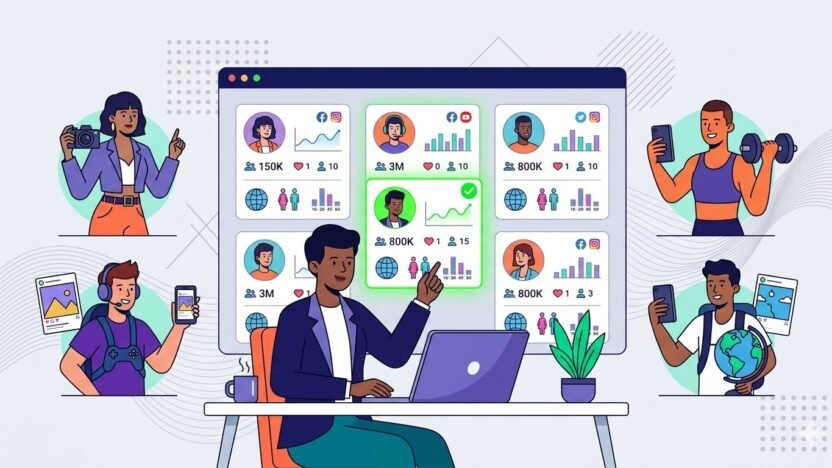
There are more influencers active on social media right now than at any point in history. By early 2026, the creator economy has over 200 million people producing content across Instagram, TikTok, YouTube, and a dozen other platforms. For brands trying to find the right partner, that is not an advantage — it is a filtering problem.
Most brands approach influencer discovery the same way. They search a hashtag, find someone who looks relevant, check the follower count, and send a message. Sometimes it works. More often, the campaign underdelivers because the creator’s audience was not actually the right fit, the engagement was inflated, or the creator’s voice did not connect with the product in the way the brand hoped.
The stakes of getting this wrong are real. A mismatched influencer partnership means wasted budget, content that does not resonate, and metrics that make it impossible to know if the channel is working at all. A well-matched one means an audience that is predisposed to trust the recommendation, content that feels native to the platform, and measurable results that build confidence to invest more.
This guide walks through the complete process of finding the right influencers for your brand in 2026 — from defining exactly what right means for your specific situation to the tools and signals you can use to evaluate creators before you commit. The framework here applies whether you are running your first campaign or trying to build a more rigorous process into an existing program.
Why Finding The Right Influencer For Your Campaign
Every other decision in influencer marketing — the brief, the content format, the posting schedule, the tracking setup — builds on the foundation of creator selection. Choose the wrong person and nothing downstream can fix it. Choose the right person and even an imperfect brief often produces strong results because the audience connection was there from the start.
The research from 2026 consistently points to one finding: brands that focus on audience alignment and engagement quality over follower count get significantly better returns from their campaigns. A micro-influencer with 35,000 highly engaged followers in your exact niche will almost always outperform a creator with 500,000 broadly dispersed followers where your target customer makes up a small fraction of the total audience.
According to a 2026 Influencer Marketing Hub study, micro-influencer campaigns achieved 3.5 times higher ROI than macro-influencer campaigns on average — a gap that has widened year over year as audiences become more selective about which creators they trust.
The implication is clear. The quality of your creator selection process is directly proportional to the quality of your campaign results. Brands that invest time in finding the right match before outreach consistently outperform those that move fast and fix problems later.
Understanding why influencer marketing is important as a channel also means understanding that its power comes from the trust relationship between creator and audience — and that trust only transfers to your brand when the creator fit is genuine, not just commercially convenient.
Define What Right Actually Means for Your Brand Before You Search
The most common mistake in influencer discovery is starting the search before you have a clear definition of what you are looking for. Without that definition, every creator you find is evaluated against an unclear standard, and selection becomes subjective rather than systematic.
Defining right requires answering four specific questions before you open a single Instagram profile.
What Is the Goal of This Campaign?
Different goals require different types of creators. If you want to reach as many new people as possible for a product launch, reach matters and you might look at larger creators despite their lower engagement rates. If you want to drive purchases through an affiliate code, you need creators whose audience is close to making buying decisions and whose recommendations carry strong conversion weight — which usually means micro or mid-tier creators with high trust levels.
Your campaign goal shapes every filter you apply in discovery. Write it down before you start. Not a vague statement like ‘increase brand awareness’ — be specific about what you want to happen, how you will measure it, and what a successful outcome looks like.
Who Is Your Target Customer and Where Do They Spend Time?
Before looking at any creator’s follower count, you need a detailed picture of your target customer. Age, gender, location, interests, problems they are trying to solve, values they hold, content they consume daily. The more specific this picture is, the more useful it becomes as a filter when evaluating whether a particular creator’s audience matches it.
This customer profile also tells you which platform to focus on. A brand targeting professional women aged 30 to 45 in B2B will have a very different platform strategy than one targeting teenage gaming enthusiasts. The platform that carries the most weight with your target customer is where your influencer search should start.
What Brand Values Must a Creator Share?
Beyond audience demographics, the creator’s own values, content themes, and public identity need to align with your brand. A sustainable fashion brand working with a creator who regularly promotes fast fashion is not just a missed opportunity — it is an active risk. Audiences notice these misalignments and so do journalists.
Before you start evaluating creators, write down three to five values or content themes that a potential creator partner must demonstrate consistently. These become non-negotiable filters, not nice-to-haves.
What Is Your Budget Range?
Creator rates vary dramatically by tier, platform, and content format. Having a realistic budget range before you start searching prevents you from wasting time vetting creators you cannot afford, and stops you from anchoring your search on follower count when engagement and audience fit are better predictors of return.
Understanding Influencer Tiers: Choosing the Right Level for Your Goals
One of the most important structural decisions in influencer discovery is which tier of creator to target. This is not just a budget question — different tiers produce meaningfully different types of results, and matching the right tier to your campaign goal is a core part of finding the right fit.
| Tier | Follower Range | Typical Engagement | Content Cost Range | Best For |
| Nano | 1,000 – 10,000 | 5% – 10%+ | $20 – $200 per post | Grassroots growth, community trust, highly niche products, gifting campaigns |
| Micro | 10,000 – 100,000 | 2% – 6% | $100 – $2,000 per post | Targeted niche reach, strong ROI, authentic community engagement |
| Mid-Tier | 100,000 – 500,000 | 1% – 3% | $1,500 – $8,000 per post | Balanced reach and credibility, scaling awareness in a defined category |
| Macro | 500,000 – 1M | 0.8% – 2% | $4,000 – $20,000 per post | Large-scale brand awareness, product launches, broad category campaigns |
| Mega / Celebrity | 1M+ | 0.3% – 1% | $15,000 – $100,000+ | Maximum reach, cultural moments, luxury brand positioning |
For most brands and most campaign goals, micro and mid-tier influencers deliver the strongest return on investment. Their audiences are engaged and specific, their content feels more authentic than polished celebrity endorsements, and their rates are reasonable relative to the quality and quantity of reach they deliver.
Nano-influencers deserve more attention than they typically receive in strategy conversations. Their engagement rates are the highest of any tier, their audience relationships are the most personal, and gifting campaigns with nano-creators can generate genuine content at minimal cost. For niche products and community-driven brands, nano-influencers are often the highest-ROI choice in the entire tier spectrum.
The guide to types of influencers and how each tier performs across different campaign objectives gives you a deeper breakdown of when to use which level of creator — and how to build a roster that combines different tiers for different parts of your marketing funnel.
The Five Signals That Tell You a Creator Is the Right Fit
Once you have defined what right means for your brand and which tier you are targeting, you need a reliable framework for evaluating individual creators. Follower count is the metric most people check first. It is also the least useful predictor of whether a creator will deliver results for your campaign.
Here are the five signals that actually matter — and how to read each one.
Signal 1: Audience Demographic Match
The creator’s audience needs to match your target customer profile. Not approximately — closely. If your product is designed for working mothers aged 28 to 42 in the UK, you need a creator whose audience data confirms that demographic breakdown. A creator in the right niche with an audience that is 70% male aged 18 to 24 is not a match, regardless of how relevant their content looks.
This is where most brands run into a wall. Audience demographic data is not publicly visible on Instagram or most other platforms. Follower counts are public. Post engagement is public. But the actual breakdown of who makes up an audience — age, gender, geographic location — sits inside the creator’s own analytics dashboard and is not accessible to third parties without special access.
This is the core reason why verified first-party analytics matter so much in creator evaluation. A tool that accesses a creator’s own Instagram Insights gives you real demographic data. A tool estimating from public signals gives you an educated guess that may be significantly wrong.
Signal 2: Engagement Quality, Not Just Engagement Rate
Engagement rate is more useful than follower count, but it still misses something important. Two creators can have identical engagement rates with very different quality of engagement. One has 400 comments per post that are genuine conversations — people sharing their experiences, asking questions, recommending the content to others. The other has 400 comments that are mostly generic emoji responses and one-word reactions.
Before adding any creator to your shortlist, spend ten minutes reading their comments. The quality of conversation that happens in a creator’s community tells you far more about the trust level and purchase intent of that audience than any percentage figure can.
Look for comments that show the audience acted on previous recommendations: ‘I bought this after your last video and it actually worked.’ ‘Can you do a review of X?’ These comments tell you the audience trusts the creator’s word enough to make decisions based on it.
Signal 3: Content Relevance and Natural Fit
Before any paid partnership, ask whether your product could appear in this creator’s content without feeling like an intrusion. If a skincare creator would logically feature your moisturiser as part of their normal routine content, the partnership has a natural fit. If they would need to completely change their content format or topic to include your product, the audience will sense that disconnect.
Look back through the last two to three months of the creator’s content. Is your product category represented there naturally? Does their tone and style match your brand voice? Would their audience be surprised to see them using your product, or would it make complete sense?
Signal 4: Consistency and Posting Frequency
A creator who posts consistently is a creator whose audience remains engaged. An influencer who posts three times a week maintains a rhythm their audience follows and expects. One who posts in bursts — five posts in a week then nothing for three weeks — has an audience whose attention has likely drifted between bursts.
Posting consistency also signals professionalism. Creators who treat their channels as a serious business maintain regular schedules. Those who are inconsistent are often harder to work with on campaign timelines and deliverable deadlines.
Signal 5: Past Brand Collaboration History
Look at what brands a creator has worked with before. Did they promote competitors? Do they take every sponsorship that comes their way, or are their partnerships selective and credible? Does their audience respond positively to their sponsored content, or do the paid posts have noticeably lower engagement than their organic content?
A creator who only works with brands that genuinely fit their content style is far more valuable than one who promotes anything for the right fee. Their audience knows the difference, and their reaction to your campaign will reflect it.
The Best Discovery Methods for Finding Influencers in 2026
With your criteria defined and your evaluation framework set, you can start the actual search. There are several different methods for finding potential creator partners, each with different tradeoffs in terms of time, depth, and reliability.
Method 1: Organic Discovery Through Your Own Community
The best creator partners for many brands are already talking about them. Start by checking your existing follower list, your brand mentions, your tagged posts, and your comment sections. People who already use your product and have audiences of their own are pre-qualified in the most important way: they have a genuine relationship with what you make.
These organic advocates are often more convincing than contracted creators precisely because their association with your brand is not commercial in origin. Their audience already knows they use your product without being paid to say so. When a partnership formalises that relationship, it feels like an upgrade rather than a transaction.
This discovery method takes time but produces extremely high-quality leads. Build a practice of regularly checking who is talking about your brand and flagging anyone with an engaged audience worth following up on.
Method 2: Platform-Native Search and Hashtag Research
Going directly to Instagram, TikTok, or YouTube and searching relevant hashtags, keywords, and topics is the most accessible discovery method. You can find creators who are actively producing content in your category, see their recent work in context, and get a sense of their style and community before any formal evaluation.
The limitation is scale and depth. Manual platform search is slow, provides no audience demographic data, and makes it hard to compare creators systematically. For building an initial list of names to research further, it works well. As your primary discovery method for a large campaign, it is inefficient.
Practical tips for platform search: Search the specific problem your product solves, not just your category. A fitness supplement brand will find more relevant creators by searching ‘pre-workout routine’ or ‘gym nutrition’ than by searching ‘fitness’ broadly. Narrow, specific searches surface creators with focused audiences.
Method 3: Referrals From Existing Creator Relationships
Influencers know other influencers, particularly within specific niches. If you have worked with a creator who performed well, asking them who else in their network might be a good fit is one of the highest-quality discovery methods available. A warm referral from someone who already understands your brand means the new creator comes pre-contextualised.
These introductions also tend to produce faster, warmer outreach conversations. The referred creator knows something genuine about you before the first message arrives. That trust head-start often translates into more authentic content and stronger audience responses.
Method 4: Competitor and Category Research
Look at which creators are working with brands in your category or with your direct competitors. This surfaces creators who have already demonstrated a willingness to engage with products like yours, whose audience has already been exposed to your category, and whose content format is proven to work for what you make.
This is not about replicating what your competitors do. It is about identifying the pool of creators who have demonstrated category relevance — and then finding the ones within that pool who are not already locked into exclusive deals.
Method 5: Influencer Discovery Platforms
Dedicated influencer discovery tools let you search by niche, follower range, engagement rate, location, audience demographics, and other filters. They dramatically accelerate the initial shortlisting process and give you comparative data across many profiles that would take weeks to compile manually.
The quality of these tools varies significantly, and the most important variable is data quality. Tools that rely on third-party estimates of audience demographics are useful for initial filtering but should not be trusted for final creator selection without verification. Tools that access verified first-party data — pulled from the creator’s own analytics account — give you information you can actually base budget decisions on.
For teams evaluating which discovery and management tools to use, the comparison of best influencer marketing campaign management tools covers data quality, feature depth, and pricing across the most widely used platforms in 2026.
How to Vet Influencers Properly: The Due Diligence Process
Finding a creator who looks right is not the same as confirming they are right. Vetting is the process of going deeper on the creators who passed your initial filters to confirm that what you can see from the outside reflects what is actually happening with their audience.
This step is where most brands spend too little time, and where the most expensive mistakes happen. A creator who looks excellent based on public metrics but has a high proportion of fake followers or a disengaged audience will deliver close to zero return on a paid campaign.
Checking for Authentic Engagement
Look at the comments on their last ten to fifteen posts. Count how many are substantive versus generic. Check whether the same accounts are commenting repeatedly across many different posts — this is a sign of engagement pods where groups of creators artificially inflate each other’s metrics. Look at the ratio of comments to likes: a very high like count with very few comments often indicates purchased likes.
On TikTok and YouTube, watch time data is a strong indicator of real audience interest. Creators with high view counts but very low average watch time have audiences that scroll past their content without actually engaging with it.
Follower Growth Pattern Analysis
A creator’s follower growth history tells you a lot about how their audience was built. Organic growth looks like a steady, upward curve with occasional faster growth periods tied to viral content or platform promotions. Purchased follower growth looks like sudden vertical spikes — a jump of 20,000 followers in three days followed by a flat or declining trend.
Check the creator’s follower count at multiple points in their history if possible. Many analytics tools show growth over time, and significant unexplained spikes are a reliable signal of purchased followers.
Audience Quality Assessment
Beyond engagement rate, the quality of the audience itself matters. An audience with a large proportion of bot accounts, inactive profiles, or accounts from demographics irrelevant to your target customer is not a valuable audience regardless of its size.
The only reliable way to assess audience quality is with verified data from the creator’s own account. Estimated audience quality scores from third-party tools can be useful as a rough filter but should not be the basis for final budget decisions.
This is exactly the gap that tools like Hyperr Manage are designed to fill. When creators connect their Instagram accounts directly to the platform, brands get access to verified first-party Insights data — real audience demographics, actual reach figures, and genuine engagement metrics that no outside tool can estimate accurately. Using an Instagram influencer analytics tool that accesses verified data rather than public estimates fundamentally changes the reliability of your creator selection decisions.
Brand Safety Review
Before finalising any creator on your shortlist, review their full content history for anything that could create reputational risk for your brand. This includes political content that conflicts with your brand values, past controversies, partnerships with brands you would not want to be associated with, and any content that contradicts the values your target customer expects from brands they support.
This review should cover a minimum of three months of content, ideally six. A single problematic post two years ago is different from a pattern of content that sits in tension with your brand positioning.
Platform-Specific Discovery: Finding the Right Creator on the Right Channel
Different platforms have different creator cultures, content formats, and audience behaviours. Your discovery approach needs to account for these differences — and your platform choice should be driven by where your target customer is most active, not by which platform is currently getting the most press.
| Platform | Best Creator Type | Top Discovery Method | Key Vetting Signal | Campaign Best Fit |
| Lifestyle, beauty, fashion, food, fitness micro/mid-tier | Hashtag + niche keyword search, then verify via Insights tool | Story completion rate and real audience demographics | Product launches, brand awareness, lifestyle integration | |
| TikTok | Entertainment, Gen Z, trends, comedy, beauty | For You Page browsing, trending sound analysis | Video completion rate and comment authenticity | Viral product moments, challenges, Gen Z reach |
| YouTube | Tech, finance, education, gaming, long-form review | Search-based discovery for relevant topic keywords | Average view duration vs subscriber count ratio | Product reviews, tutorials, deep trust-building |
| B2B, SaaS, professional services, finance | Keyword and job title search, LinkedIn creator mode profiles | Comment quality and professional engagement | B2B product launches, thought leadership, professional tools | |
| Home, wedding, food, fashion, DIY | Board and keyword search, reputable pins | Consistent aesthetic and saves-to-follower ratio | Discovery-driven categories, evergreen content |
For most consumer brands in 2026, Instagram and TikTok together cover the broadest reach across the most commercially active demographics. Instagram still dominates for product discovery in categories like beauty, fashion, food, and fitness. TikTok is where momentum happens — it is the platform where unknown brands can go viral overnight through the right creator partnership.
YouTube deserves more attention than it typically gets in influencer discovery conversations. The platform’s long-form content format means creator reviews can drive high-intent traffic for months or years after publication. A strong YouTube review from a credible creator in your niche can be one of the highest-ROI creator investments you make precisely because of its longevity.
The Influencer Shortlisting Process: Building a Qualified List
Once you have been through the discovery and initial vetting process, you will have a pool of potential creators. The next step is narrowing that pool to a shortlist that you will take into outreach. The goal is quality over quantity — five creator relationships with genuine potential are worth far more than twenty who look acceptable on the surface.
Creating a Consistent Evaluation Framework
The most effective way to build a shortlist is to evaluate every creator against the same set of criteria using a consistent scoring approach. This removes the subjectivity that otherwise creeps into creator selection and makes it much easier to compare creators directly.
Your evaluation criteria should include: audience demographic match score, engagement quality rating, content relevance assessment, follower growth pattern, brand safety review, and estimated rate-to-value fit. Score each creator on each dimension and use that combined score to rank your candidates.
| Evaluation Criterion | Weight | What to Measure |
| Audience demographic match | High | Age, gender, location alignment with your target customer profile |
| Engagement quality | High | Comment authenticity, conversation depth, audience response to past brand posts |
| Content relevance | High | Natural product category fit, brand voice alignment, content consistency |
| Follower authenticity | High | Growth pattern, bot proportion, engagement-to-follower ratio |
| Past collaboration quality | Medium | Audience response to paid posts vs organic content, brand alignment history |
| Posting consistency | Medium | Regular posting schedule, content quality consistency over time |
| Platform alignment | Medium | Primary platform matches where your target audience is most active |
| Rate estimate vs budget | Medium | Estimated cost relative to projected reach and engagement quality |
For your first round of shortlisting, identify your top 15 to 20 candidates across all platforms. From that pool, deep-vet the top 10 using the fuller process described in the previous section. Your outreach list should be around five to eight creators for a standard campaign, giving you room to accommodate non-responses and misalignments that only emerge after initial conversations.
Why More Is Not Better in Creator Selection
There is a temptation, especially for teams new to influencer marketing, to maximise the number of creators in a campaign in order to maximise potential reach. The logic is understandable but the results usually disappoint. A campaign spread across 25 marginally relevant creators produces scattered, inconsistent messaging and makes it nearly impossible to identify which creator relationships are worth investing in further.
A tighter roster of five to ten well-matched creators produces stronger, more coherent content, makes campaign management far more straightforward, and gives you clean comparative data on creator performance that actually tells you something useful for future campaigns.
The Authenticity Test: The Question Every Brand Should Ask
Beyond all the data and metrics, there is one question that consistently predicts whether a creator partnership will produce results: would this creator use this product even without a paid deal?
When the answer is genuinely yes, partnerships feel natural to audiences. The creator can speak about the product from real experience. Their audience does not sense a purely commercial motivation. And the content that results is more convincing, more credible, and more likely to drive the audience behaviour you want.
When the answer is no — when the creator is clearly promoting a product they have no genuine connection to — audiences sense it immediately. The engagement on paid posts drops noticeably. Comments are sceptical. The brand association the campaign was supposed to build either does not happen or happens negatively.
A 2026 consumer study found that 64% of consumers value an influencer’s authenticity above all other factors when deciding whether a recommendation influences their purchase decision. And 67% said the best brand-influencer collaborations are those that feel honest and unbiased. These numbers have been rising every year for half a decade.
The practical implication is to look for evidence of genuine product affinity before approaching any creator. Have they previously talked about products in your category without being paid? Do their content themes suggest they would naturally use what you make? Is there anything in their organic content that signals interest in the problem your product solves?
This is also why brands that invest in finding the right influencer through a thorough process, rather than casting widely and hoping for the best, consistently see stronger long-term results. The detailed comparison between influencer marketing and social media ads shows that the authenticity advantage is the core reason influencer marketing delivers higher ROI than standard advertising for most campaign goals.
Niche vs Broad Reach: Making the Right Trade-Off for Your Category
One of the most useful decisions in influencer discovery is how to position yourself on the spectrum between deep niche reach and broad category reach. The right position depends on your product, your target customer, and your campaign goal.
When Niche Creators Win
For products that solve specific problems for specific people, niche creators almost always outperform broader lifestyle accounts. A running brand targeting serious marathon runners will get better results from a creator who focuses exclusively on long-distance running and has 25,000 highly engaged followers who are all serious runners than from a general fitness influencer with 300,000 followers across all workout types.
The niche creator’s audience has self-selected for an intense interest in the specific thing your product addresses. The recommendation lands with people who are not just tangentially interested — they are actively invested in the category and actively looking for good products within it.
When Broader Creators Make Sense
For products with genuinely wide appeal — daily use items, lifestyle accessories, universally relevant health or wellness products — broader creators can make sense because the relevance ceiling of niche audiences limits total addressable reach. A hydration product that every active adult could benefit from does not need to limit itself to dedicated endurance sports creators.
The key is that even broader lifestyle creators should have a specific content focus and a clear audience personality. A lifestyle creator whose audience is diffuse, passive, and demographically inconsistent is still a poor choice regardless of their follower count.
Red Flags: When to Remove a Creator From Your Shortlist
Knowing what to look for in a good creator match is important. Equally important is knowing the warning signs that should remove someone from consideration regardless of how appealing their follower count or content quality looks on the surface.
| Red Flag | What It Looks Like | Why It Matters |
| Sudden follower spikes | 10,000+ new followers in a few days with no viral content to explain it | Strong indicator of purchased followers — reach will be inflated |
| Generic comment patterns | Most comments are emojis, ‘great post’, or single-word responses | Signals engagement pods or bot activity — not real audience engagement |
| Engagement-follower mismatch | 500,000 followers with 300 comments per post | Either purchased followers, inactive audience, or both |
| Over-promotion pattern | More than 40-50% of posts are paid partnerships | Audience has learned to ignore sponsorships from this creator |
| Inconsistent content quality | Strong posts followed by very poor quality — erratic style and tone | Unreliable creative output that may damage brand perception |
| Competing brand exclusives | Recent paid posts with direct competitors still active | Contractual conflicts or credibility issues with promoting your brand |
| Brand safety concerns | Content that conflicts with your brand values or creates reputational risk | Association risk that campaigns cannot undo once live |
| No disclosure on paid content | Sponsored posts not clearly labelled as such | Regulatory compliance risk for your brand as the sponsoring party |
Any one of these red flags should give you serious pause before proceeding. Several together should remove the creator from your shortlist entirely, regardless of how well they score on other criteria. The cost of a problematic partnership — in budget wasted, in brand damage, in compliance risk — is always higher than the cost of continuing to search for a better fit.
The Role of Data Tools in Finding the Right Influencer
The influencer marketing SaaS landscape in 2026 has more capable tools than ever before. Understanding what different types of tools offer — and where their limitations are — helps you use them intelligently rather than treating all data outputs as equally reliable.
Discovery Databases
Platforms like Modash and HypeAuditor maintain large searchable databases of public creator profiles. You can filter by niche, follower range, estimated engagement rate, and sometimes estimated audience demographics. These are useful for generating an initial pool of potential creators, especially in categories where you have limited existing network.
The critical caveat is data quality. Everything these tools show you about audience demographics is estimated from public signals. The estimates can be wrong, sometimes significantly. They are useful for first-pass filtering, not for final creator selection or budget commitment.
Verified Analytics Platforms
A different category of tool accesses verified first-party data by having creators connect their own accounts. When a creator authorises a platform to access their Instagram Insights, the brand sees the same data the creator sees — real audience age and gender breakdowns, actual reach figures, genuine story view counts, and verified geographic distribution of their followers.
This class of tool changes what is possible in creator evaluation. Decisions about audience fit that were previously made on estimated data can now be made on verified data. The difference in confidence and campaign outcome is significant.
Hyperr Manage uses exactly this model. Creators connect their Instagram accounts through a unique invitation link, and brands see verified Insights data directly from the creator’s account — not an algorithm’s estimate. Combined with campaign management, digital agreement tools, and post performance tracking at $75 per month, it gives marketing teams genuine data quality alongside the workflow infrastructure to manage campaigns properly. The guide to influencer audience analytics explains in detail what verified audience data makes possible versus what estimated data can tell you.
Social Listening Tools
Social listening platforms monitor mentions, hashtags, and conversations across social media. For influencer discovery specifically, they are useful for finding creators who are already talking about your brand or your category organically — without any commercial relationship. These are the highest-quality leads in discovery because the creator’s connection to your space is already established.
Finding Influencers as a Small Brand: Making the Most of a Tight Budget
The framework in this guide applies at any budget level, but the strategy shifts when you are working with limited resources. Small brands have structural advantages in influencer discovery that larger competitors do not — and understanding those advantages changes how you should approach the process.
Small brands can build more personal, direct relationships with creators. You can offer access, exclusivity, and a genuine story that large brands cannot. A small independent skincare brand with a compelling founder story is often more interesting to a niche beauty creator than a partnership with a major conglomerate brand.
Gifting Campaigns as a Discovery Tool
Before committing paid budget to a creator you have never worked with, gifting your product is a low-cost way to test the relationship. Send the product with a personalised note and no obligation to post. A creator who genuinely likes the product and posts organically about it has demonstrated both product affinity and audience interest without any formal campaign.
This approach surfaces your highest-quality potential paid partners — ones who liked the product enough to share it without financial incentive — and builds a shortlist based on authentic product fit rather than metrics alone.
Starting Small and Building Relationships
Rather than spreading a small budget across many one-off partnerships, small brands get stronger returns by investing deeply in three to five creators they can build ongoing relationships with. A creator who works with your brand across three or four campaigns over a year builds genuine familiarity that audiences notice and respond to differently than a single sponsored post from someone who has never mentioned you before.
The full guide on influencer marketing tools for small brands covers the discovery and management approach that works best when your budget is limited, including which platform features give small teams the most leverage without the overhead of enterprise-level tools.
From Discovery to Partnership: What Happens After You Find the Right Creator
Finding the right creator is the first part of the process. What happens after discovery — outreach, negotiation, briefing, content management, and performance tracking — determines whether that good match actually produces results.
The most common failure mode after successful discovery is letting the operational side of campaign management undermine the creative potential of a well-matched partnership. Vague briefs that do not give creators what they need to produce strong content. Contracts that are unclear about deliverables or rights. Performance tracking that is set up too late or not at all.
Understanding how influencer marketing works end-to-end — from the discovery decision through to campaign launch and performance reporting — gives you the full framework for turning a good creator match into a campaign that delivers measurable results.
The operational side of managing multiple creator relationships — agreements, content approvals, performance tracking — also requires proper infrastructure. The guide to how Hyperr Manage simplifies influencer campaign management covers exactly how marketing teams are replacing scattered manual workflows with a verified-data platform that manages the full campaign lifecycle in one place.
And for marketing agencies managing influencer programs across multiple clients, the specific requirements around multi-client organisation, reporting quality, and campaign scalability are covered in the dedicated guide to the best influencer campaign management tool for marketing agencies.
Common Influencer Discovery Mistakes and How to Avoid Them
Before wrapping up, it is worth addressing the mistakes that brands make most consistently in the discovery process — because even teams that know the theory often fall into these traps under the pressure of campaign timelines.
- Rushing past vetting to save time: The time saved by skipping thorough vetting is always paid back in campaign underperformance. A campaign with the wrong creator costs not just the creator fee but the opportunity cost of the entire campaign window.
- Chasing follower count under stakeholder pressure: Internal decisions about influencer selection are often influenced by what looks impressive in a presentation rather than what will perform. A creator with 800,000 followers sounds better in a meeting than one with 40,000 — but if the 40,000-follower creator’s audience is your exact target customer, they will almost always outperform.
- Using only one discovery method: Hashtag search alone, or database search alone, misses the highest-quality candidates who are found through referrals, organic community monitoring, or paid search on a different platform. Use multiple methods to build a richer pool.
- Treating all platforms as equivalent: A creator who is excellent on TikTok may have minimal influence on Instagram. Always evaluate a creator on the specific platform where you want the campaign to run, not on their aggregate cross-platform presence.
- Making decisions without verified audience data: Any creator selection that is based on estimated demographics rather than verified first-party data carries unnecessary risk. If the creator can connect their account to a platform that provides verified Insights, require that as part of your evaluation process.
- Ignoring the comment section: The comments on a creator’s posts are the most honest window into their audience quality and trust level. No metric replaces actually reading what real people say in response to the creator’s content.
- Over-optimising for rate negotiation: A creator who is slightly over your initial budget but is a genuinely excellent match will almost always outperform a cheaper creator who is a mediocre fit. The negotiation conversation is worth having before you disqualify someone on rate alone.
The practical and strategic benefits of getting this process right — and the very real costs of getting it wrong — are detailed in the comprehensive breakdown of the benefits and drawbacks of influencer marketing as a channel. Understanding both sides honestly is what allows brands to invest in influencer partnerships with appropriate expectations and realistic planning.
The Right Creator Changes Everything: Final Thoughts
Influencer marketing in 2026 is not short of options. There are more creators, more platforms, more content formats, and more data tools available than at any point in the channel’s history. The challenge is not finding influencers — it is finding the right ones with enough rigour to make your investment worthwhile.
The framework in this guide gives you a structured approach to that challenge: define what right means before you search, understand which tier fits your goal, evaluate against signals that actually predict performance rather than vanity metrics, vet thoroughly before committing budget, and build a shortlist based on genuine match quality rather than the path of least resistance.
The brands that win consistently with influencer marketing in 2026 are not the ones with the biggest budgets or the most recognisable creator partners. They are the ones with the most disciplined discovery and selection process — teams that know exactly who their audience is, exactly what signals indicate a real match, and exactly how to validate those signals with verified data before making a decision.
When that process is in place, and when the operational side of managing creator relationships is supported by the right tools, influencer marketing helps brands grow in ways that are both measurable and sustainable. The right creator, found through a rigorous process, briefed clearly, and managed professionally, is one of the most powerful growth investments a brand can make.
Start with the process. The right creators follow.
Want verified influencer data to power smarter creator decisions?
Hyperr Manage gives your team first-party Instagram Insights, roster management, digital agreements, and campaign tracking — starting at $75/month with a 7-day free trial. Visit Hyperr Manage to get started.