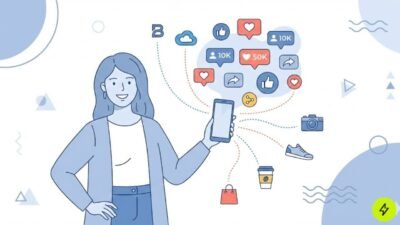
Think about the last time you bought something because someone you follow online talked about it. Maybe it was a skincare product, a new app, or a pair of sneakers. Chances are, you didn’t feel like you were being sold to — it just felt like a genuine recommendation from someone you trust.
That’s exactly how influencer marketing works. And it’s why thousands of brands — from global giants to small local businesses — are investing in it more than ever before.
In this guide, we’re going to go deep into how influencer marketing helps brands grow, build trust, reach new audiences, and drive real revenue. We’ll cover real strategies, industry data, and practical insights — all in plain, simple English.
What Is Influencer Marketing and Why Do Brands Use It?
Influencer marketing is a collaboration between a brand and a content creator who has an engaged, loyal online audience. The creator — called an influencer — promotes the brand’s products or services to their followers in an authentic, natural way.
But why do brands use it? Simple: because it works.
Traditional advertising is losing its grip. People skip TV ads, use ad blockers, and scroll past banner ads without a second glance. What they do pay attention to is the content created by people they already follow and trust.
According to Influencer Marketing Hub, the influencer marketing industry reached $21.1 billion in 2023 and is projected to keep growing. Brands are clearly getting results — otherwise they wouldn’t keep spending.
Here’s a quick look at why brands are choosing influencer marketing over traditional methods:
| Traditional Advertising | Influencer Marketing |
| Brand speaks directly to consumer | A trusted person speaks on brand’s behalf |
| Feels promotional and scripted | Feels natural and authentic |
| High cost, low engagement | Flexible cost, high engagement |
| Broad, untargeted reach | Niche, highly targeted reach |
| Hard to build emotional connection | Built on pre-existing trust and rapport |
| One-way communication | Two-way conversation with audience |
10 Powerful Ways Influencer Marketing Helps Brands
Let’s get into the real meat of this guide. Here are ten concrete, proven ways that influencer marketing creates value for brands of every size.
1. Builds Genuine Brand Awareness
The very first job of any marketing campaign is to get people to know your brand exists. Influencer marketing does this better than almost any other channel — and faster too.
When an influencer mentions your brand in a post, video, or story, their entire audience — people who already trust and follow that creator — is suddenly exposed to your name, product, or service. That’s not just reach. That’s warm reach, which is far more valuable than cold impressions from a banner ad nobody asked to see.
A study by Nielsen found that earned media (including influencer content) delivers 4x greater brand lift than paid media alone. That means influencer campaigns don’t just raise awareness — they raise it in a way that actually sticks in people’s minds.
For new brands especially, a single well-placed influencer post can be the difference between zero visibility and thousands of new potential customers discovering you overnight.
2. Drives Targeted Audience Reach
One of the biggest advantages brands get from influencer marketing is the ability to reach the exact type of person most likely to buy from them.
Every influencer has a specific niche — fitness, gaming, food, travel, parenting, finance, beauty, and more. When a brand partners with an influencer in their niche, they’re essentially getting a direct line to a room full of people who already care about that topic.
Compare that to running a Facebook ad where you’re guessing at targeting parameters. Influencer marketing removes the guesswork. The audience is already self-selected.
Examples of Niche Influencer Targeting:
- Fitness brand → Partners with gym and workout influencers
- Organic food brand → Works with health and wellness creators
- Gaming peripheral company → Collaborates with Twitch streamers
- Baby product brand → Partners with mommy bloggers and parenting creators
- Financial app → Works with personal finance YouTubers
3. Increases Brand Credibility and Trust
Trust is the most valuable currency in modern marketing. And it’s incredibly hard to build from scratch. Most consumers are skeptical of branded advertising — they know brands are trying to sell them something, so they put their guard up.
Influencers solve this problem elegantly. Their followers already trust their opinions. When an influencer says “I’ve been using this product for three months and it genuinely changed my routine”, it carries a completely different weight than a brand saying the same thing in an ad.
According to Edelman’s Trust Barometer, 63% of consumers trust influencer opinions more than brand communications. That’s a staggering figure — and it explains why influencer endorsements convert so well.
This third-party credibility is something money can’t directly buy through traditional advertising. It has to be earned — and influencer partnerships are one of the most reliable ways to borrow it.
4. Generates High-Quality, Reusable Content
Here’s something many brands overlook: when you hire an influencer, you’re not just paying for a post. You’re paying for a piece of professionally crafted, audience-tested content that features your brand in a real-world setting.
This content — photos, videos, reels, reviews, unboxings, tutorials — can be repurposed across:
- Your brand’s own Instagram, TikTok, and Facebook pages
- Your website’s product pages and testimonials section
- Email marketing campaigns
- Paid social ads (with permission from the creator)
- Sales decks and presentation materials
Think of it as content marketing and influencer marketing happening at the same time. You’re building a content library while also running a campaign — which gives you tremendous long-term value beyond the initial post.
5. Boosts Sales and Conversions Directly
Influencer marketing isn’t just about ‘soft’ metrics like brand awareness and impressions. When done right, it drives real, measurable sales.
The most common tactics that turn influencer content into direct revenue include:
- Unique discount codes — Followers use a creator’s exclusive code at checkout, making purchases easy to track
- Affiliate links — Influencers earn a commission per sale, giving them strong motivation to convert their audience
- Product tags — Instagram and TikTok allow shoppable posts where followers can buy with one tap
- Limited-time offers — Creating urgency through influencer-only flash sales drives immediate action
- Giveaways and contests — Drive engagement, grow followers, and create purchase intent simultaneously
A Tomoson study found that businesses earn an average of $6.50 for every $1 spent on influencer marketing. That’s a 650% ROI — figures that most paid advertising channels simply can’t match.
6. Improves SEO and Search Visibility
Many people don’t realize that influencer marketing has a meaningful SEO benefit beyond social media. Here’s how it works:
When influencers — especially bloggers and YouTubers — mention your brand and link back to your website, those are high-quality backlinks. Search engines like Google use backlinks as a signal of authority and trustworthiness. More quality links = better rankings in search results.
On top of that, influencer campaigns generate branded search volume. When people see your brand mentioned by someone they follow, they often Google your name shortly after. This surge in branded searches signals relevance to search engines — another positive SEO signal.
According to Moz, backlinks remain one of the top three Google ranking factors. Influencer partnerships — especially with content creators who run established blogs or YouTube channels — are one of the most natural ways to earn them.
7. Accelerates Social Media Growth
Growing a brand’s social media following organically can take years. Influencer shoutouts can compress that timeline dramatically.
When an influencer tags your brand, features your product, or encourages their followers to check out your page, a percentage of their audience will follow you. Over time, repeated influencer collaborations compound this effect, building you a genuine community of engaged followers who are already primed to buy.
This is especially powerful for new brands that are starting from zero. A strong influencer campaign in the first few months can kickstart a social media presence that would otherwise take years to build organically.
8. Helps Brands Enter New Markets
Launching into a new geographic market or demographic group is one of the hardest things a brand can do. Consumer behavior, cultural nuances, and local preferences vary enormously. Getting it wrong can be expensive and embarrassing.
Influencer marketing offers a smarter, lower-risk way to enter new markets. By partnering with local influencers who already understand the culture and have built-in trust with that audience, brands can introduce themselves in a way that feels natural and relevant.
For example, a US-based fashion brand expanding into Southeast Asia might partner with popular local lifestyle influencers in Indonesia, Thailand, or the Philippines — gaining instant cultural credibility that no amount of paid advertising could manufacture.
9. Creates Long-Term Brand Ambassadors
The best influencer relationships don’t start and end with one sponsored post. When brands nurture ongoing partnerships, influencers can evolve into genuine brand ambassadors — people who talk about your products regularly, organically, and with increasing authenticity over time.
Long-term ambassador partnerships work better for several reasons:
- The audience sees repeated, consistent messaging — which builds stronger recall
- The influencer becomes genuinely familiar with the product — making their content more credible
- Trust compounds over time — early followers who saw post #1 are more likely to convert after seeing posts #5 and #6
- The relationship becomes mutually beneficial — both sides are invested in each other’s success
Brands like Gymshark, Daniel Wellington, and Glossier built their entire early-stage marketing strategies around long-term influencer ambassador programs — and their growth stories speak for themselves.
10. Provides Valuable Audience Insights
Every influencer campaign is a goldmine of consumer data — if you know how to read it.
By analyzing which influencer posts performed best, what type of content got the most engagement, which products resonated, and what comments the audience left, brands can gather real-world consumer insights that are hard to get any other way.
These insights can inform future product development, advertising creative, messaging strategy, and even customer service improvements. You’re not just running a campaign — you’re running a live research study with real consumers.
How Influencer Marketing Impacts Different Brand Goals
Different brands have different goals. Here’s how influencer marketing maps to each of the most common brand objectives:
| Brand Goal | How Influencers Help | Best Influencer Type |
| Build Brand Awareness | Wide reach through organic content | Macro & Mega Influencers |
| Drive Online Sales | Discount codes, affiliate links, shoppable posts | Micro & Macro Influencers |
| Launch a New Product | Unboxing videos, first impressions content | Micro Influencers & YouTubers |
| Enter a New Market | Local influencers with cultural credibility | Local Nano & Micro Influencers |
| Improve Brand Trust | Long-term ambassadors, authentic reviews | Niche Micro Influencers |
| Grow Social Following | Shoutouts, tags, follower challenges | Mid-tier Influencers |
| Generate Content | Sponsored posts, photos, and reels | All Tiers |
| Boost SEO | Blog posts, YouTube reviews with backlinks | Bloggers & YouTubers |
Choosing the Right Type of Influencer for Your Brand
Not all influencers are the same — and the right choice depends heavily on your budget, goals, and target audience. Here’s a breakdown:
| Tier | Followers | Avg. Engagement | Best For |
| Nano | 1K – 10K | 5% – 8% | Hyper-local, niche communities |
| Micro | 10K – 100K | 3% – 5% | Targeted campaigns, high trust |
| Mid-tier | 100K – 500K | 1.5% – 3% | Balance of reach and engagement |
| Macro | 500K – 1M | 1% – 1.5% | Large brand awareness campaigns |
| Mega / Celebrity | 1M+ | 0.5% – 1% | Mass market, global reach |
For most small and medium-sized brands, micro and mid-tier influencers offer the best combination of cost-efficiency, engagement, and targeted reach. They’re the sweet spot of the influencer marketing world.
Which Industries Benefit Most From Influencer Marketing?
Influencer marketing works across virtually every sector, but some industries have seen especially strong results:
- Fashion & Apparel — Visual products thrive on Instagram and TikTok. Style influencers drive direct purchase decisions.
- Beauty & Skincare — Tutorial content, before/after reviews, and ‘get ready with me’ videos are enormously persuasive.
- Food & Beverage — Recipe creators, food reviewers, and restaurant bloggers drive both awareness and foot traffic.
- Health & Wellness — Fitness influencers, nutritionists, and mental health creators build deep trust in this space.
- Technology & Consumer Electronics — Review channels on YouTube and tech creators on Twitter/X drive high-consideration purchase decisions.
- Travel & Hospitality — Destination content from travel creators inspires bookings and attracts new tourists.
- Gaming — Twitch streamers and gaming YouTubers have incredibly loyal communities that respond strongly to product recommendations.
- Home & Lifestyle — Interior design, DIY, and home decor creators have turned platforms like Pinterest and Instagram into shopping destinations.
How to Start Using Influencer Marketing for Your Brand
Ready to get started? Here’s a step-by-step framework that works for brands of any size:
Step 1: Define Your Goals and Budget
Before anything else, get clear on what you want to achieve. Are you trying to build awareness, drive sales, grow your social following, or launch a new product? Your goal will shape every decision that follows — including which influencers to work with, what type of content to request, and how to measure success.
Set a realistic budget. You don’t need millions to get started. Many highly effective micro-influencer campaigns run on budgets of $500 to $5,000 per month.
Step 2: Identify the Right Influencers
Use tools like Upfluence, Grin, AspireIQ, or HypeAuditor to find influencers in your niche. Look for creators whose audience demographics match your target customer, whose engagement rate is strong (not just their follower count), and whose content style aligns with your brand values.
Always check for signs of fake followers or bot activity before reaching out. Low-quality followers mean low-quality results, no matter how impressive the follower count looks.
Step 3: Craft a Clear but Flexible Brief
Give influencers a clear brief that covers your key messages, any mandatory elements (like a specific hashtag or disclosure requirement), and the timeline. But leave room for their creativity. The most authentic — and highest-performing — influencer content comes when creators are allowed to speak in their own voice.
Step 4: Set Up Tracking and Measurement
Always set up proper tracking before the campaign goes live. Create unique UTM links for each influencer, set up custom discount codes, and define your KPIs (key performance indicators) upfront. These might include impressions, reach, engagement rate, click-through rate, conversions, or revenue generated.
Step 5: Build and Nurture the Relationship
Don’t treat influencer partnerships as one-off transactions. Send follow-up messages, share campaign results, offer exclusive perks, and look for ways to collaborate again. The best influencer-brand relationships grow stronger over time — and that growing familiarity is something your audience can feel.
Key Influencer Marketing Statistics for 2026
Numbers don’t lie. Here are some of the most important stats that show just how powerful influencer marketing has become for brands:
| Statistic | Source |
| Global influencer marketing industry worth $21.1B in 2023 | Influencer Marketing Hub |
| 49% of consumers depend on influencer recommendations to make purchases | Digital Marketing Institute |
| Influencer marketing ROI averages $6.50 per $1 spent | Tomoson |
| Micro-influencers drive 60% higher campaign engagement than macro-influencers | Experticity |
| 71% of marketers say influencer partnerships improve brand authenticity | Linqia |
| 92% of consumers trust peer recommendations over branded content | Nielsen |
| 63% of consumers trust influencer opinions more than brand messaging | Edelman |
Top Influencer Marketing Tools and Platforms
Managing influencer campaigns manually is time-consuming. These tools make it easier:
| Tool | Best For | Website |
| Hyperr Manage | Track ROI & Manage Influencer, Analyse Influencer Audience | manage.hyperrvolt.com |
| HypeAuditor | Influencer vetting & fraud detection | hypeauditor.com |
| Upfluence | Finding & managing influencers | upfluence.com |
| Grin | eCommerce brand campaigns | grin.co |
| AspireIQ | Community-based campaigns | aspire.io |
| Modash | Influencer discovery & analytics | modash.io |
| Traackr | Enterprise influencer management | traackr.com |
Common Mistakes Brands Make With Influencer Marketing
Avoiding these mistakes will save you money, time, and frustration:
- Choosing influencers based on follower count alone — Engagement rate and audience relevance matter far more than vanity metrics.
- Skipping the vetting process — Always check for fake followers, past controversies, and content quality before signing a deal.
- Over-scripting the content — Over-controlling the message kills authenticity. Give creative freedom within clear guidelines.
- Running one-off campaigns without follow-through — Single posts rarely move the needle. Consistent, long-term exposure is what builds brand recognition.
- Not disclosing sponsored content — This is both an ethical issue and a legal one. Make sure influencers clearly label paid partnerships per FTC/ASA guidelines.
- Ignoring the data — Always track campaign performance. If you don’t measure it, you can’t improve it.
- Working with influencers outside your niche — Reach without relevance is wasted spend. Always prioritize niche alignment over raw numbers.
Final Thoughts: Why Influencer Marketing Is a Brand’s Best Friend
Let’s bring it all together. Influencer marketing helps brands in ways that go far beyond a simple sponsored post. It builds trust in a way traditional advertising cannot. It reaches targeted, engaged audiences that are already primed to care about your product. It generates content, SEO value, social growth, and direct revenue — often all at the same time.
Whether you’re a new startup trying to get your first thousand customers, or an established brand looking to break into a new market, influencer marketing gives you a human, authentic, and cost-effective path to growth.
The brands that succeed with influencer marketing are the ones that approach it with a clear strategy, genuine relationship-building, and a commitment to measuring results. Start small, learn fast, and build from there.
The audience is already out there, listening to the voices they trust. Your job is to make sure one of those voices is talking about you.