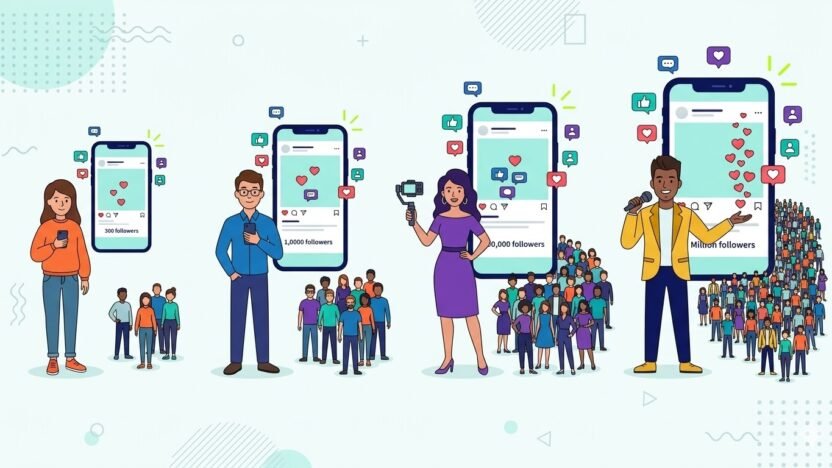
If you have ever planned an influencer marketing campaign and felt confused about which type of creator to pick, you are not alone. The world of influencer marketing has grown into a $32.55 billion industry in 2025, and with that growth comes a wide variety of creator tiers, each working differently for different campaign goals.
The biggest mistake brands make is assuming that bigger is always better. A mega influencer with 10 million followers is not automatically a better choice than a nano influencer with 5,000 followers. It fully depends on what you want to achieve — awareness, conversions, trust, community growth, or all of the above.
This guide breaks down every major influencer tier — nano, micro, macro, and mega — in clear, simple terms. You will learn what each one is, how they perform, what they cost, and when to use each of them. Whether you are a solo marketer at a small brand or part of a large agency team running multiple campaigns, understanding these categories is the first step to building a smarter influencer strategy.
What Is an Influencer? A Quick Refresher
An influencer is a person who has built an audience on social media and has the ability to affect the opinions, choices, and buying decisions of that audience. They create content consistently, build trust with their followers over time, and become go-to voices in their specific niche — whether that is fitness, travel, food, tech, fashion, parenting, finance, or something else entirely.
The key thing to understand is that an influencer’s power does not just come from their follower count. It comes from the relationship they have built with their audience. That is why a creator with 3,000 followers in a very specific niche can sometimes deliver better results for a brand than a celebrity with 3 million followers.
The influencer marketing space has matured a lot in the last few years. Brands are no longer just chasing big numbers. They are looking for authentic engagement, niche alignment, verified audience data, and measurable campaign results. This is also why tools like Hyperr Manage have become so important for teams running campaigns at scale — the need for proper management, verified data, and structured workflows has never been higher.
Why Categorizing Influencers Matters for Your Strategy
Before we go into each type, it is worth understanding why these categories exist and why they matter.
Influencers are grouped by follower count because that is the most consistent and measurable way to compare creators across platforms. However, follower count alone never tells the full story. What you also need to look at is engagement rate, niche relevance, audience demographics, and content quality.
Still, the four main tiers — nano, micro, macro, and mega — are helpful starting points. Each tier has a general pattern of behavior, pricing, and performance that helps brands and marketers make decisions without starting from scratch every time.
Here is a simple overview of all four tiers before we go deeper:
| Influencer Type | Follower Range | Avg. Engagement Rate (Instagram) | Best For |
|---|---|---|---|
| Nano | 1,000 – 10,000 | 6.23% | Hyper-local, niche, grassroots |
| Micro | 10,000 – 100,000 | 3.86% | Targeted niche, conversions |
| Macro | 100,000 – 1,000,000 | 1.5% – 2% | Brand awareness, broad reach |
| Mega | 1,000,000+ | 0.92% – 1.42% | Mass reach, brand prestige |
Now let us go through each one properly.
Nano Influencers: Small But Mighty
Who Are Nano Influencers?
Nano influencers are everyday people who have built a small but genuinely engaged following on social media, typically between 1,000 and 10,000 followers. They are not famous. They are not full-time content creators in most cases. They are your neighbor who loves cooking, a college student who is passionate about sustainability, or a local gym enthusiast who posts their workouts daily.
What makes them special is the type of relationship they have with their audience. Because their follower count is small, they interact with almost everyone who comments on their posts. Their followers feel like they actually know them. That kind of closeness is nearly impossible to replicate at higher follower counts.
Nano influencers on Instagram deliver an average engagement rate of 6.23% — the highest of any tier on the platform. On TikTok, that number can go even higher, reaching 10.3% or more. Compare this to mega influencers who average around 0.92% on Instagram, and the difference becomes very clear.
What Makes Nano Influencers Different
The biggest differentiator for nano influencers is trust. Their followers see them as a real person, not a brand spokesperson. When a nano influencer recommends a product, it feels like getting advice from a friend — not watching an advertisement.
This authenticity is increasingly valuable. Research consistently shows that consumers are more likely to act on a recommendation from someone they feel personally connected to, even if that person is “just” a social media creator with a few thousand followers.
Another major advantage is cost. Working with nano influencers is significantly more affordable than any other tier. Brands can often collaborate with multiple nano creators for the budget it would take to run a single macro campaign. This gives smaller brands and startups access to influencer marketing in a way that was not possible before this tier became recognized.
The Limitations of Nano Influencers
There are real limitations here that brands need to understand. Because nano influencers have small followings, each individual campaign delivers limited reach. If you need to reach 500,000 people quickly, working with a single nano influencer will not get you there.
Additionally, many nano influencers lack professional experience in creating branded content. They may not understand usage rights, FTC disclosure requirements, or how to deliver campaign assets in the right format. This means brands need to invest more time in briefing and guiding these creators.
Managing a large number of nano influencers simultaneously can also become complex very quickly. Without a proper campaign management tool for teams, tracking deliverables, approvals, and performance metrics across 20 or 30 nano influencers at once becomes a real operational challenge.
When Should You Use Nano Influencers?
- You are a local business wanting to reach a specific city or neighborhood
- You are launching a new product and want honest, authentic first impressions
- Your campaign goal is conversions or trust-building rather than mass awareness
- You have a limited budget but want genuine engagement
- You want to test messaging before scaling up to larger creators
- You are targeting a very specific niche community
Micro Influencers: The Sweet Spot for Most Brands
Who Are Micro Influencers?
Micro influencers have between 10,000 and 100,000 followers. They have moved beyond casual posting and are usually treating their social media presence as a serious creative pursuit. Many of them specialize in a defined niche — fitness, personal finance, sustainable fashion, beauty routines, home decor, travel on a budget, and so on.
They have built their following by consistently creating content that their specific audience finds useful, entertaining, or relatable. Because of this, their followers are genuinely interested in what they have to say, not just passively scrolling past their posts.
Micro influencers generate around 3.86% average engagement on Instagram — substantially higher than macro or mega influencers. On TikTok, micro-tier creators deliver around 8.7% engagement rates on average. These numbers represent real audience interaction, not just passive impressions.
Why Micro Influencers Are Called the Sweet Spot
The phrase “sweet spot” gets used a lot with micro influencers, and it is genuinely earned. They offer a combination of reach and trust that is hard to find at other tiers.
Unlike nano influencers, they have enough of an audience to deliver meaningful reach for a campaign. Unlike macro influencers, they still maintain a personal enough presence that their audience trusts them. That balance — reach plus trust — is what makes them effective for such a wide range of campaign types.
Micro influencers are typically very knowledgeable in their niche. A fitness micro influencer has not just built a following; they have demonstrated consistent expertise in workouts, nutrition, or body transformation over months or years. When they recommend a protein powder or gym equipment, it carries weight because their audience has already seen them live the lifestyle.
For brands, this means that micro influencer campaigns often drive stronger conversion rates compared to larger tiers. The audience is pre-qualified — they are already interested in the niche your product belongs to.
Understanding Micro Influencer Content and Platforms
Micro influencers operate across every major platform, but Instagram and TikTok are currently the strongest for this tier. Instagram works particularly well for product-focused content, lifestyle imagery, and Stories-based campaigns. TikTok is increasingly effective for discovery-driven campaigns, especially for younger demographics.
YouTube micro influencers are also a strong option for products that benefit from detailed reviews or tutorials — tech gadgets, skincare products, kitchen tools, software, and anything that benefits from a proper demonstration.
One thing to keep in mind is that micro influencers are starting to become more selective about the brand deals they take. As this tier has professionalized, many micro creators now protect their audience trust carefully and will decline brand partnerships that do not feel authentic to their content. This is actually a good sign — it means the collaborations they do say yes to tend to perform better.
How to Manage Micro Influencer Campaigns Effectively
Running campaigns with micro influencers requires structured management. You need to handle creator agreements, content briefs, approval workflows, post tracking, and performance reporting. Doing this manually through spreadsheets creates errors, missed deadlines, and wasted hours every single week.
This is where a purpose-built influencer campaign management tool makes a real difference. When you are coordinating with 10, 20, or 50 micro influencers, having all their agreements, deliverables, post links, and analytics in one place keeps your team sane and your campaigns on track.
If you are running influencer campaigns regularly, moving away from spreadsheets and into a proper platform is one of the best operational decisions you can make.
When Should You Use Micro Influencers?
- Your brand is in a defined niche with a specific target audience
- You want a balance of reach and engagement
- Your goal is driving purchases, sign-ups, or other conversions
- You are working with a moderate budget and want consistent performance
- You want creators who can produce quality branded content with minimal direction
- You are building long-term ambassador relationships
Macro Influencers: When You Need Broad Reach
Who Are Macro Influencers?
Macro influencers have between 100,000 and 1,000,000 followers. At this level, content creation has usually become their primary career or a significant professional pursuit. They have invested heavily in their brand, their content quality, and their audience growth.
Most macro influencers have gained their following through consistent online content creation — they became “internet famous” by being great at their craft on social media, YouTube, podcasting, or blogging. Unlike mega influencers, they usually do not have mainstream celebrity status, which means their audience often feels a more genuine connection with them compared to traditional celebrities.
What You Get With Macro Influencers
The primary value of a macro influencer is reach. When you need to put your brand in front of hundreds of thousands of people quickly, macro influencers deliver that capability.
They are also typically very experienced at brand collaborations. They have worked with multiple brands, they understand how to create content that meets brand guidelines while still feeling authentic, and they know how to handle agreements, deliverables, and deadlines professionally.
Macro influencers are particularly effective for:
- Large-scale product launches that need wide visibility fast
- Establishing brand credibility in a new market
- Campaigns that need high-production content across multiple formats
- Reaching a broad demographic within a general interest category
- Creating content that can be repurposed for paid advertising
The engagement rate at the macro level is lower than nano or micro, typically sitting between 1.5% and 2% on Instagram. However, because the audience size is much larger, the absolute number of people who engage is still quite significant.
The Cost Reality of Macro Influencer Campaigns
Macro influencers cost meaningfully more than micro or nano creators. Depending on the platform, niche, and creator’s specific audience quality, rates can range from a few thousand dollars to tens of thousands per post or campaign. This makes them less accessible for small brands or campaigns with tight budgets.
However, for medium to large brands, macro influencers can represent good value when the campaign objective is awareness. If you need to reach a million people with your new product launch message, a well-chosen macro influencer might deliver that in a single campaign at a cost that beats equivalent paid advertising reach.
The key is ensuring that the macro influencer’s audience genuinely overlaps with your target customer. A large but misaligned audience wastes your budget. This is where proper influencer audience analytics become critical before you sign any agreement.
The Challenge of Managing Macro Campaigns
Even with fewer influencers to manage at the macro level, campaigns at this tier involve higher stakes, larger contracts, stricter usage rights, and more complex approval processes. A mistake in a macro campaign — a post that goes live without approval, incorrect messaging, missing disclosure — carries much greater risk.
A solid influencer management workflow that handles agreements, content approval, and performance tracking in one place protects both the brand and the creator relationship. Hyperr Manage at $75/month gives marketing teams and agencies the structure they need for exactly this kind of campaign management.
When Should You Use Macro Influencers?
- Your primary campaign goal is brand awareness and reach
- You are launching a new product, service, or brand to a wide audience
- You have a meaningful budget allocated for creator partnerships
- You want aspirational or prestige associations for your brand
- You need high-quality, polished content created by experienced creators
- You are running a time-sensitive campaign that needs large reach quickly
Mega Influencers: Maximum Visibility, Maximum Investment
Who Are Mega Influencers?
Mega influencers have over 1,000,000 followers. This tier includes traditional celebrities — actors, athletes, musicians, TV personalities — as well as a newer category of internet-native mega creators who built massive audiences entirely through social media. Think of the biggest names on YouTube, Instagram, or TikTok with audiences in the tens of millions.
At this level, influence operates differently. Mega influencers are known by a vast number of people who have never actually interacted with them. The relationship is parasocial — followers feel a one-sided connection with someone they follow, even though the influencer has never met them personally.
What Mega Influencers Offer
The singular advantage of mega influencers is scale. When a mega influencer posts about a brand, millions of people see it. That kind of exposure is unmatched by any other tier in a single collaboration.
They also bring aspirational value. Being associated with a widely known personality or celebrity can elevate brand perception in ways that are difficult to achieve through other channels. For luxury brands, major product launches, or campaigns designed to make cultural impact, mega influencers represent a unique tool.
Mega influencers are also experienced at navigating high-profile brand partnerships. They typically have professional management teams, lawyers reviewing agreements, and established processes for delivering sponsored content.
The Trade-Offs at the Mega Level
The engagement rate drops significantly at the mega level. On Instagram, mega influencers average around 0.92% to 1.42% engagement. This means a much smaller percentage of their audience is actively interacting with their content compared to smaller tiers.
Research shows that 50% of millennials trust influencer recommendations, but only 38% trust celebrity endorsements — a meaningful gap that reflects the real engagement and trust difference between mega creators and smaller, more connected influencers.
The cost is also very significant. A single sponsored post from a high-profile mega influencer can range from $50,000 to well over $1 million. For most brands, this rules out regular mega influencer partnerships entirely.
There is also less control over creative direction and messaging. When working with celebrities of this profile, brands typically have less say in how content is created, and there is always the risk of the influencer’s personal actions reflecting negatively on your brand through association.
When Does It Make Sense to Use Mega Influencers?
- You are an established brand with a large marketing budget
- Your campaign needs cultural impact or mass market visibility
- You are positioning your brand as aspirational or premium
- You need a single, powerful piece of content that drives enormous reach
- You are running a campaign timed to a major cultural moment — sports event, awards season, etc.
For most growing brands and smaller companies, mega influencers are not the right starting point. The cost-to-return ratio rarely makes sense unless the campaign objective is purely visibility at scale.
Influencer Tiers Side-by-Side: A Detailed Comparison
Let us put everything together in one place so you can see how all four tiers compare across the metrics that matter most for campaign planning.
| Factor | Nano | Micro | Macro | Mega |
|---|---|---|---|---|
| Follower Range | 1K – 10K | 10K – 100K | 100K – 1M | 1M+ |
| Avg. Engagement (Instagram) | 6.23% | 3.86% | 1.5 – 2% | 0.92 – 1.42% |
| Avg. Engagement (TikTok) | 10.3% | 8.7% | ~3% | ~7.1% |
| Content Authenticity | Very High | High | Moderate | Lower |
| Audience Trust | Very High | High | Moderate | Lower |
| Cost Per Post | Low ($20–$250) | Medium ($100–$1,500) | High ($1,000–$20,000) | Very High ($50,000+) |
| Brand Awareness Reach | Limited | Moderate | Large | Massive |
| Conversion Potential | High | High | Moderate | Low |
| Content Quality | Variable | Good | High | Very High |
| Campaign Management Complexity | High (volume) | Moderate | Moderate | High (stakes) |
How to Choose the Right Influencer Type for Your Campaign
Choosing the right influencer tier is not just about budget. It is about matching the right type of creator to the right campaign objective. Here is a simple framework to help you make that call.
Step 1: Define Your Campaign Objective
Start with clarity on what you actually want this campaign to achieve. There is a big difference between wanting 100,000 people to see your brand name and wanting 500 people to buy your product.
- Brand Awareness: You want as many people as possible to know you exist. Macro or mega influencers serve this goal better because of their reach.
- Engagement and Community Building: You want real conversations, shares, and active audience participation. Micro and nano influencers win here.
- Conversions and Sales: You want people to click a link, use a discount code, or make a purchase. Micro influencers consistently outperform at this goal.
- Trust and Credibility: You want your brand to be seen as trusted and authentic. Nano and micro influencers carry the most credibility because their audiences see their recommendations as genuine.
Step 2: Know Your Budget
Budget determines what is possible. But a limited budget does not mean limited impact — it just means choosing your tier wisely.
A brand with $3,000 can either work with a single lower-tier macro influencer OR run a campaign with 15 micro influencers OR collaborate with 30+ nano influencers. Each approach has different strengths. More creators at lower tiers often outperform a single creator at a higher tier for engagement and conversion goals.
Understanding the benefits and drawbacks of influencer marketing at each budget level helps you go in with realistic expectations and smarter decisions.
Step 3: Analyze Audience Alignment
The most important thing — more important than follower count and often more important than engagement rate — is whether the influencer’s audience matches your target customer.
A macro influencer with 500,000 followers in the beauty niche is completely wrong for a B2B software campaign, no matter how impressive their numbers look. Always analyze audience demographics: age, gender, location, interests, and purchasing behavior before making any partnership decision.
This is where verified analytics tools become essential. Using a platform with access to real Instagram Insights data — not estimated or scraped data — gives you actual audience breakdowns rather than guesses.
Step 4: Think About the Long Term
One-off influencer posts rarely deliver transformative results. The brands that see the best ROI from influencer marketing are those building ongoing relationships with creators across multiple campaigns. This is true whether you are working with nano, micro, or macro influencers.
Long-term partnerships allow influencers to genuinely integrate your brand into their content world, which reads as far more authentic to their audience than a single sponsored post. Planning for recurring campaigns with the same creators is almost always more cost-effective and more impactful.
Mixing Influencer Tiers: The Multi-Tier Strategy
One of the most effective approaches modern brands are taking is the multi-tier influencer strategy. Rather than choosing just one type, they combine influencer tiers for different roles within the same campaign.
Here is how this typically works:
A brand running a product launch might use a single macro influencer to announce the product and create initial buzz. At the same time, they activate 20 to 30 micro influencers to create niche-specific content and drive conversions with their highly engaged audiences. They might also work with 50+ nano influencers for grassroots word-of-mouth in specific communities or locations.
Each tier plays a role that the others cannot. The macro influencer delivers the wide reach that creates brand recognition. The micro influencers drive engagement and conversions. The nano influencers bring hyper-local or hyper-specific authenticity that makes the campaign feel genuinely embedded in communities, not just broadcast at them.
This layered approach requires proper tools and organization to execute well. Managing 80 influencer relationships at once — agreements, content review, post tracking, performance reporting — needs a system built for it, not a stack of spreadsheets. A proper influencer marketing SaaS platform that can handle this complexity is what separates campaigns that run smoothly from campaigns that are chaos.
What Engagement Rate Actually Tells You (And What It Doesn’t)
Engagement rate is one of the most cited metrics in influencer marketing, but it is widely misunderstood. Here is what you need to know.
Engagement rate = (Likes + Comments + Shares) / Total Followers × 100
It tells you what percentage of an influencer’s audience is actively interacting with their content. A 5% engagement rate means that for every 100 followers, 5 people are liking, commenting, or sharing a typical post.
Higher engagement rates generally mean the audience is more attentive, more loyal, and more likely to be influenced by the creator’s recommendations. This is why nano and micro influencers, despite having smaller audiences, often drive better conversion results — their audiences are actively paying attention.
However, engagement rate does not tell you:
- Whether those engagements are from real people or fake accounts
- Whether the audience actually trusts the influencer’s brand recommendations
- Whether the audience demographics match your target customer
- How many of those engagements lead to actual purchases or actions
This is why Instagram influencer analytics tools that pull verified data directly from the platform — rather than estimating from public posts — give you a much more accurate picture of an influencer’s real performance. Platforms connected to Instagram’s official API can show you actual audience insights, real engagement breakdowns, and demographic data that goes far beyond surface-level follower counts.
The Role of Niche in Influencer Selection
Beyond follower count and tier, the niche an influencer operates in is just as important. Two micro influencers with identical follower counts and engagement rates can deliver completely different results for the same brand depending on their content niche.
Research shows that campaigns matching the influencer’s niche to the product category achieve 13.59% higher engagement and 81.39% more views than misaligned campaigns. Yet only about 37% of brands consistently prioritize niche alignment in their influencer selection process.
This represents a huge opportunity. By simply being deliberate about choosing influencers whose niche genuinely fits your product or brand, you can dramatically outperform competitors who are selecting influencers based on follower count alone.
Common niches and their characteristics:
Lifestyle: Broad niche. Works across many product types. Nano and micro lifestyle influencers exist in enormous numbers. Good for products that appeal to general audiences.
Fitness and Wellness: Highly engaged audiences. Strong purchase intent for relevant products (supplements, equipment, apparel, apps). Micro influencers in this niche tend to have audiences that are very motivated to try new products.
Beauty and Skincare: One of the highest-spending categories in influencer marketing. Audiences are research-oriented and purchase-ready. Authenticity is critical — audiences can spot forced partnerships immediately.
Food and Cooking: High engagement, strong community feel. Works especially well for nano and micro creators who share recipes, restaurant reviews, or food product recommendations.
Tech and Gaming: Highly specific, loyal audiences. Credibility is paramount — tech audiences value expertise above all else. Micro influencers in this space often have more authority than larger creators.
Parenting: Deep trust and community. Purchasing decisions in this niche are high-consideration and heavily influenced by peer recommendations.
Finance and Business: Growing rapidly. Audiences are engaged, financially motivated, and receptive to relevant product recommendations. Micro and macro influencers in this space build serious authority.
Platform Matters: Matching Influencer Tier to Social Media Channel
Different social media platforms favor different influencer tiers. Understanding this match helps you build campaigns that work with the platform’s algorithms and user behavior rather than against them.
Instagram is still the dominant platform for influencer marketing, used by 57% of brands. Nano and micro influencers perform exceptionally well here, with nano creators delivering 6.23% average engagement. Instagram Reels have extended the reach potential of smaller creators significantly. For product discovery, lifestyle campaigns, and anything visual, Instagram remains essential.
TikTok
TikTok’s algorithm is unique — it actively promotes quality content to new audiences regardless of the creator’s follower count. This makes it the most level playing field for influencers at all tiers. Nano influencers on TikTok achieve 10.3% engagement, making it their strongest platform. The key is video content quality and relevance, not audience size.
YouTube
YouTube favors mid-tier and macro creators for longer-form content. However, nano and micro YouTube influencers have extremely loyal audiences who watch full videos — making them highly valuable for detailed product reviews, tutorials, and unboxings. ROI on YouTube tends to be longer-lasting since videos continue generating views for months or years.
A very different platform for influencer marketing, but highly relevant for B2B brands. Micro influencers on LinkedIn — thought leaders, industry practitioners, consultants — carry significant authority in professional communities. The engagement is lower numerically but the intent is much higher. A recommendation from a respected LinkedIn micro influencer can directly drive B2B purchasing decisions.
Influencer Marketing vs. Other Digital Channels
One question that often comes up when planning a marketing strategy is how influencer marketing compares to paid social ads, search advertising, or other digital channels.
The core difference is trust. Ads interrupt. Influencers integrate. When a user sees a Facebook ad, they know it is an advertisement and their guard is up. When they see their favorite micro influencer talk about a product in a way that feels natural to their usual content, the message lands very differently.
Influencer marketing vs. social media ads is a comparison worth understanding in depth, but the short version is: ads are better for direct, scalable reach at controlled cost; influencers are better for trust, brand affinity, and community-driven growth. The most effective digital strategies use both together.
How Influencer Marketing Actually Works in Practice
Understanding the theory of influencer tiers is one thing. Seeing how influencer marketing works in a real campaign workflow is another.
A typical campaign — regardless of which influencer tier you are using — follows a similar structure:
1. Goal Setting: Define what you want the campaign to achieve and how you will measure it.
2. Creator Selection: Identify influencers in the right tier and niche. Analyze their audience demographics, engagement rates, and content quality. Verify that their audience data is authentic, not inflated with fake followers.
3. Outreach and Agreement: Reach out to creators, negotiate rates and deliverables, and formalize the partnership with a signed agreement. This is a step many brands handle loosely, which creates problems later. A proper digital agreement process — like the one built into Hyperr Manage — ensures both parties are clear on expectations, usage rights, disclosure requirements, and payment terms.
4. Content Briefing: Share a clear creative brief that gives the influencer everything they need to create the content — brand guidelines, key messages, format requirements, posting schedule — while still leaving them room to create in their own authentic style.
5. Content Review and Approval: Review content before it goes live to ensure it meets brand standards and compliance requirements, especially FTC disclosure guidelines.
6. Campaign Live: Posts go live according to the agreed schedule. Track links, monitor comments, and start collecting performance data.
7. Reporting: Pull performance metrics — reach, engagement, link clicks, conversions — and compare against your original campaign goals. Use these insights to improve your next campaign.
Managing Influencer Campaigns at Scale
As your influencer program grows — whether you are running campaigns for your own brand or managing multiple clients as an agency — the operational complexity grows with it.
Running 5 micro influencer campaigns manually is manageable. Running 50 is not. The difference is not just time; it is data. Without a centralized system, you lose track of which creators have signed agreements, which posts are live, which links are driving traffic, and which creators are actually delivering results.
This is exactly the problem that a campaign management tool for teams like Hyperr Manage solves. At $75/month, it gives you verified creator roster management, digital agreements, campaign tracking, post link monitoring, and audience analytics — all in one platform, built specifically for the way influencer campaigns actually work.
For small brands just getting started with influencer marketing, there is a specific guide on how influencer marketing helps small brands grow that is worth reading before your first campaign.
And if you are curious about why influencer marketing matters as a channel in the first place — beyond the buzzwords — there is a detailed breakdown of the actual business case for investing in creator partnerships.
How to Evaluate Influencer Quality Before You Commit
Selecting an influencer tier is just the first decision. The second — and often more important — decision is evaluating specific creators within that tier before you commit budget and time to a partnership.
Here is what to look at, step by step.
1. Follower Growth Pattern
Look at how the influencer has grown their following over time. Steady, organic growth over months and years suggests a genuinely earned audience. Sudden spikes in follower count with no corresponding explanation — no viral post, no major press mention — can indicate purchased followers.
Most creator analytics tools show a follower growth graph. Before any partnership, always request access to this data or use a platform that pulls it directly from verified sources.
2. Engagement Quality, Not Just Rate
The number matters, but so does what kind of engagement it is. Look at the comment section of recent posts. Are the comments genuine, specific, and conversational? Or are they generic one-word reactions and emojis that look like bot activity?
Real engagement looks like: “I tried this product for a month and it genuinely helped with my skin.” Fake engagement looks like: “Nice post 🔥🔥” repeated across dozens of comments from accounts with no profile photos.
3. Audience Demographics
This is the piece most brands skip, and it is the one that can make or break a campaign. Even a creator with excellent engagement rates becomes a poor choice if their audience demographics do not match your target customer.
Ask for a breakdown of audience age, gender split, geographic distribution, and top interests. Platforms connected to Instagram’s official API can pull this data directly from the creator’s Insights, giving you real numbers rather than estimates.
Using a proper influencer audience analytics platform for this step protects your budget from being spent on beautiful engagement numbers that are reaching entirely the wrong people.
4. Past Brand Collaborations
Look at the creator’s recent sponsored content history. A few things to consider:
- Do they work with competitors? This may or may not be a concern depending on your exclusivity requirements.
- Do their sponsored posts feel natural in the context of their regular content, or do they feel forced and disconnected?
- Do their audiences engage positively with sponsored posts, or do the comment sections show resistance and skepticism?
A creator who handles sponsorships authentically — only promoting things they genuinely use or believe in — will deliver better results than a creator who takes every brand deal that comes their way regardless of fit.
5. Content Quality and Consistency
Scroll through their recent posts and watch their recent videos. Is the content quality consistent? Do they post regularly? Is their visual style or content voice something that would translate well to your brand’s product?
An inconsistent posting schedule or a dramatic drop in content quality over the past few months can signal that an influencer is losing momentum or engagement.
6. Platform Presence
Check whether they are active on multiple platforms. In today’s multi-channel environment, a creator who shows up on Instagram and TikTok and YouTube gives your campaign more touchpoints for the same partnership cost. But focus on where they are genuinely active and engaged, not just technically present.
Building an Influencer Program, Not Just One-Off Campaigns
Most brands begin their influencer marketing journey by running individual campaigns. One campaign to test, another to build on what worked, and slowly a pattern emerges. But the brands that see transformative results over time are those who move from running campaigns to building an influencer program.
What is the difference?
A campaign is a one-time or occasional activation — you pick some creators, they post, you measure, it ends. A program is an ongoing, structured system for discovering, managing, and growing creator relationships that consistently serves your brand’s marketing goals.
Here is what an influencer program looks like in practice:
A maintained creator roster: A curated list of influencers you have already vetted, worked with, and trust — organized by tier, niche, platform, and performance. When you need to run a campaign, you are drawing from people you already know deliver results, not starting from scratch every time.
Recurring partnerships: Your best-performing creators from previous campaigns are invited into ongoing ambassador or recurring content relationships. They understand your brand’s voice, they genuinely use your products, and their audiences have seen them endorse your brand consistently — which builds brand recognition and trust over time.
Standardized workflows: Every campaign follows the same process — creator outreach, agreement signing, content briefing, approval, posting, and performance reporting. These workflows are documented and systematized, which reduces errors and saves hours of work on every campaign.
Performance benchmarks: After running multiple campaigns, you build an internal benchmark for what good performance looks like. You know your average engagement rate, your typical cost per click, your average conversion rate from influencer traffic. These benchmarks help you spot outlier performers and optimize your creator mix over time.
Cross-tier strategy: Your program includes nano, micro, and occasionally macro creators working simultaneously at different roles within your campaign calendar. Each tier is doing the job it is best suited for.
Getting to this level of organization requires the right infrastructure. A platform built for influencer campaign management that can handle everything from agreements to post tracking to audience data in one place is what makes this kind of program sustainable at scale.
Common Mistakes Brands Make When Choosing Influencer Types
After understanding what each tier offers, it is equally important to know what to avoid. Here are the most common mistakes brands make when selecting influencer types.
Chasing Follower Count Over Audience Quality
The single most common and costly mistake. A large following with poor audience quality — lots of fake followers, low real engagement, misaligned demographics — delivers nothing. Always audit audience quality before committing to a partnership, especially at the macro or mega level where stakes are higher.
Using Only One Influencer Type
Relying exclusively on micro influencers, or exclusively on macro, limits your campaign’s potential. A layered multi-tier approach nearly always outperforms a single-tier strategy.
Ignoring Platform Fit
A macro influencer with a huge Instagram following may have minimal presence or engagement on TikTok. If your target audience lives on TikTok, their Instagram numbers are irrelevant to your campaign. Always match the influencer’s strong platform to where your audience actually spends time.
Skipping the Agreement Process
Running campaigns without formal agreements is one of the fastest ways to create problems. Unclear deliverables, missed posting dates, disputes over usage rights — all of these can be prevented with a proper signed agreement. This is non-negotiable regardless of how friendly your relationship with the creator is.
Not Tracking Campaign Performance
A surprising number of brands run influencer campaigns without ever measuring their actual results. If you do not track what worked and what did not, you cannot improve. Every campaign should have clear KPIs defined before it begins and measured after it ends. Instagram influencer analytics tools with a free trial make this much more accessible even for brands that are new to performance tracking.
Treating Influencer Marketing as a One-Time Tactic
The brands getting the best results from influencer marketing are running it as an ongoing channel, not a one-time experiment. Building long-term relationships with creators across different tiers, refining your approach based on data, and consistently growing your influencer program is what produces compounding returns over time.
The Future of Influencer Tiers
The influencer marketing landscape is not static. Here are a few shifts that are already underway and that will reshape how brands think about influencer tiers.
Nano and Micro Dominance: Brands are increasingly moving their budgets toward smaller creators. In 2026 planning data, 51.43% of brands intend to expand their nano influencer usage. The shift away from mega celebrities toward authentic community voices is not a trend — it is a structural change in how brands communicate.
Long-Term Partnerships: One-off sponsored posts are giving way to ongoing ambassador relationships. Brands are recognizing that an influencer who genuinely uses and loves their product for six months delivers far more value than one who posts once and moves on.
Data and Verification: As the industry matures, tolerance for fake followers and inflated metrics is shrinking rapidly. Brands are demanding verified audience data — real Instagram Insights, not estimated numbers — before signing agreements. Platforms that provide this verified data are becoming essential infrastructure for serious influencer programs.
Multi-Platform Creators: The most valuable influencers at every tier are those who maintain strong presence across multiple platforms. A micro influencer who creates for Instagram, TikTok, and YouTube simultaneously gives brands far more touchpoints with their audience at the same partnership cost.
AI-Assisted Discovery: The manual process of finding the right influencer is increasingly being supported by AI tools that can match brand requirements with creator attributes at speed. But data quality remains the foundation — AI is only as good as the creator data it works with.
Understanding how influencer marketing helps brands grow in this evolving landscape means staying current on both the trends and the tools available to execute campaigns properly.
Final Thoughts: The Right Tier for the Right Goal
There is no single best influencer type. There is only the right type for your specific campaign goal, budget, audience, and brand.
Nano influencers deliver unmatched trust and engagement for grassroots, hyper-local, or niche campaigns. Micro influencers are the backbone of most modern influencer strategies — high engagement, strong niche authority, accessible pricing. Macro influencers provide the scale you need for big awareness campaigns and product launches. Mega influencers bring cultural impact and mass reach when the budget allows.
The most effective brands do not choose just one. They build an influencer program that uses each tier strategically, guided by real data, executed through proper campaign management systems, and measured consistently against clear goals.
If you are ready to stop guessing and start building campaigns with verified influencer data, structured agreements, and organized campaign tracking, explore what Hyperr Manage offers — designed specifically for brands and agencies that take influencer marketing seriously, at a starting price of $75/month.
And whether you are just learning why influencer marketing works or you are an experienced marketer looking to level up your execution, understanding your influencer tiers is always the right place to start.
Frequently Asked Questions About Influencer Type
Is a nano influencer better than a micro influencer?
Neither is universally better. Nano influencers offer higher engagement rates and stronger personal trust with their audiences, which makes them excellent for hyper-local campaigns, niche products, and trust-driven marketing. Micro influencers offer a better balance between reach and engagement, making them a better fit when you need both visibility and authentic interaction. If you have a limited budget and want maximum authenticity, start with nano. If you want reach alongside engagement, micro is usually the smarter bet.
How many followers do you need to be a micro influencer?
Most definitions place micro influencers between 10,000 and 100,000 followers, though some sources narrow this to 10,000 to 50,000 as a “pure” micro range. The follower count matters less than the engagement rate and niche alignment. A creator with 12,000 highly engaged followers in a specific niche can outperform a creator with 80,000 passive followers every time.
Can small brands afford to work with influencers?
Absolutely. In fact, the rise of nano and micro influencer marketing has made influencer campaigns accessible to brands of almost any size. Many nano influencers collaborate with small brands in exchange for products, experiences, or small fees. Micro influencer rates are meaningful but manageable for most marketing budgets. The key for small brands is being strategic — identify the right niche creators, build genuine relationships, and measure results so you can reinvest in what works. There is a full guide on using influencer marketing as a small brand that walks through exactly how to approach this.
What is the difference between macro and mega influencers?
Macro influencers typically have between 100,000 and 1,000,000 followers and usually built their following through social media content creation — they are “internet famous.” Mega influencers have over 1,000,000 followers and are often traditional celebrities (actors, athletes, musicians) who have extended their fame to social media, or native social media stars who have reached massive scale. Macro influencers tend to have more niche-specific audiences and better engagement rates than mega creators, making them more cost-effective for brands with a defined target audience.
Do I need to sign contracts with every influencer?
Yes, always — regardless of the influencer’s tier or how casual the relationship feels. A signed agreement protects both parties. It specifies deliverables, timeline, content approval process, payment terms, FTC disclosure requirements, usage rights, and exclusivity clauses. Without this, misunderstandings are inevitable. For brands managing multiple creators, having a digital agreement system that allows you to create, send, sign, and store agreements in one place saves enormous amounts of time and prevents costly disputes.
How do I measure ROI from influencer campaigns?
ROI measurement depends on your campaign goals. For awareness campaigns, track reach, impressions, and brand lift. For engagement goals, track likes, comments, shares, and saved posts. For conversion goals, use trackable links, unique discount codes, or dedicated landing pages to attribute sales directly to influencer activity. Over time, building a baseline of your average cost-per-engagement and cost-per-conversion for each influencer tier gives you the benchmarks to evaluate new campaigns objectively.